




The clicks cost more than almost anywhere else. So why do B2B marketers keep spending? Because the right lead pays for a hundred wrong ones.
Are LinkedIn Ads worth it? For B2B businesses with a considered, high-value sale, usually yes. LinkedIn’s cost per click is high, but its precise targeting by job title, seniority, and company reaches decision-makers no other platform can, so a single closed deal can justify the spend. Working with an experienced LinkedIn Ads Agency can help you maximize that investment through precise targeting, campaign optimisation, and better lead quality. For low-value or purely consumer offers, cheaper platforms usually win.
Key Takeaways
- LinkedIn Ads are worth it when your deal value is high and your buyer is in a specific professional role.
- The cost per click is among the highest in advertising; judge results on cost per qualified lead instead.
- The core strength is precision: targeting by job title, seniority, company size, and industry.
- The core weakness is cost and volume; it rarely suits low-ticket or broad consumer offers.
- Measure on pipeline and revenue influenced, not clicks or impressions, which understate its contribution.
- Costs and audiences vary by region. Test locally before scaling.
Are LinkedIn Ads Worth It?
For most B2B businesses with a high-value, considered sale, LinkedIn Ads are worth it, because they reach exactly the decision-makers you need at a moment you choose. For low-value products, impulse purchases, or broad consumer audiences, the high cost per click usually makes cheaper platforms a better fit. The honest answer is that it depends on what you sell and to whom.
The question is really about fit, not quality. LinkedIn is an excellent platform doing a specific job: putting your message in front of named professional roles at chosen companies. If that is who buys from you, few channels compete. If your buyer is a consumer scrolling at home, you are paying a premium for precision you do not need. This is why a considered LinkedIn ads guide always starts with the buyer, not the budget.
This article breaks down the costs, the return, and the honest pros and cons, then gives you a simple test for whether LinkedIn Ads fit your business. It applies whether you sell software, professional services, or any considered B2B offer, and whether you operate in one market or five.
Do LinkedIn Ads Work? Understanding the Value
Yes, LinkedIn Ads work, but for a specific job: reaching professional decision-makers with precision. Whether they work for you depends on whether those decision-makers are your buyers and whether your deal value can absorb a higher cost per lead. The platform is powerful; the question is fit.
What makes LinkedIn work is the data underneath it. Members keep their own job title, seniority, company, and industry current, because the platform is professional. That first-party, self-reported data lets you target by role in a way search and social platforms simply cannot match, which is the whole reason B2B advertisers pay the premium.
Where LinkedIn does not work is when the fundamentals fight it: a low-ticket product cannot absorb the cost per lead, and a purely consumer audience is not who LinkedIn reaches best. In those cases the honest answer is that it works, just not for you, and a cheaper channel will do the job better.
Key Takeaway: LinkedIn Ads work for reaching professional decision-makers on high-value offers. Whether they work for your business is a question of fit, not capability.
How Much Do LinkedIn Ads Cost?
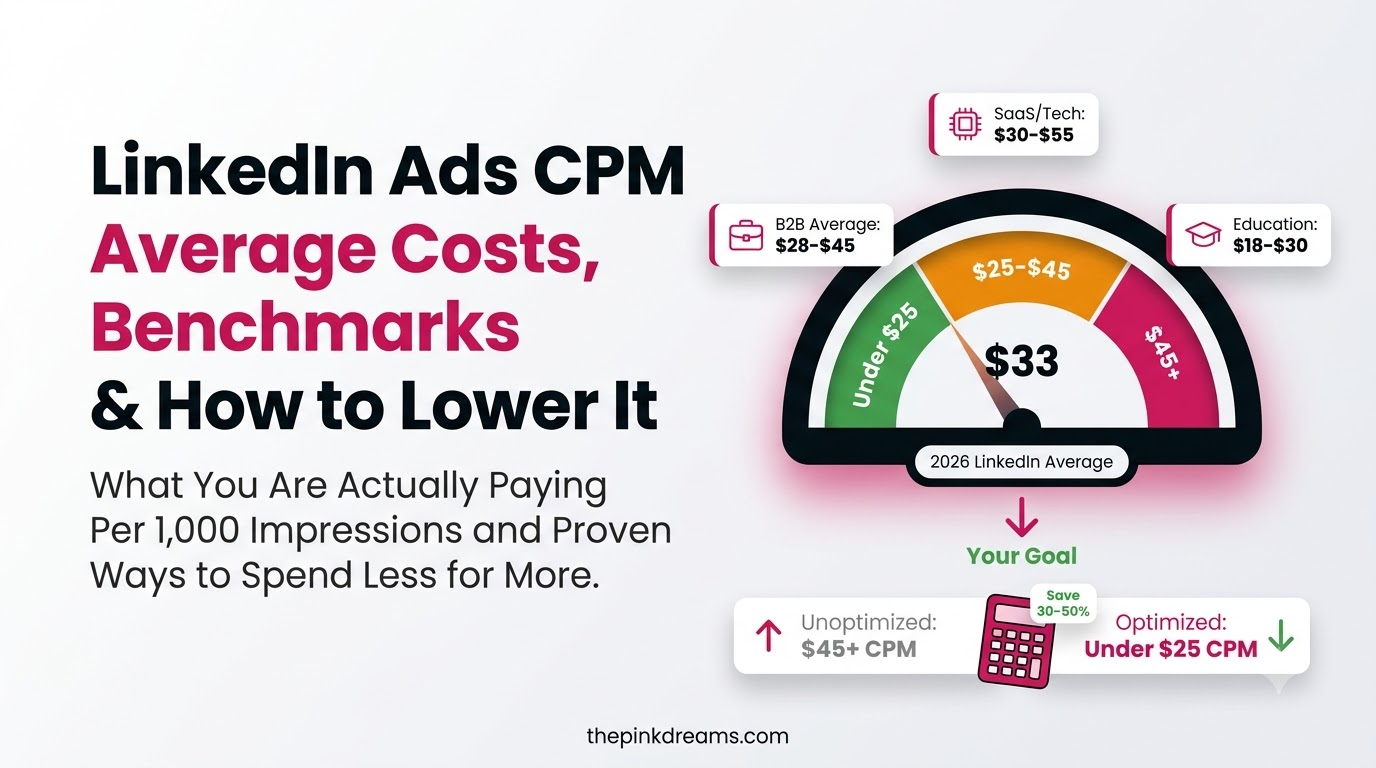
LinkedIn Ads cost more per click than almost any other platform, and its cost per click sits at the high end of digital advertising. It runs on an auction, so you set a bid, and cost varies by how competitive your target audience is: the more sought-after the role, the higher the price. But cost per click is the wrong number to judge it on.
Actual figures vary widely by country, industry, audience, and competition, so treat any published benchmark as a starting reference rather than a rule. Costs in different currencies are not comparable without adjusting for local competition. The reliable pattern is directional: LinkedIn clicks are expensive, and LinkedIn leads are often worth more per head because they come from the right people.
Because you pay a premium per click, relevance controls your real cost. A tightly targeted, well-written ad shown to the right role converts at a far lower cost per qualified lead than a broad, generic one, even though both pay the same high click price. Spend is not the metric; cost per qualified lead is.
Key Takeaway: LinkedIn clicks are expensive by design. Judge the platform on cost per qualified lead, where relevance, not bid, decides whether it is affordable.
LinkedIn Ads Pros and Cons
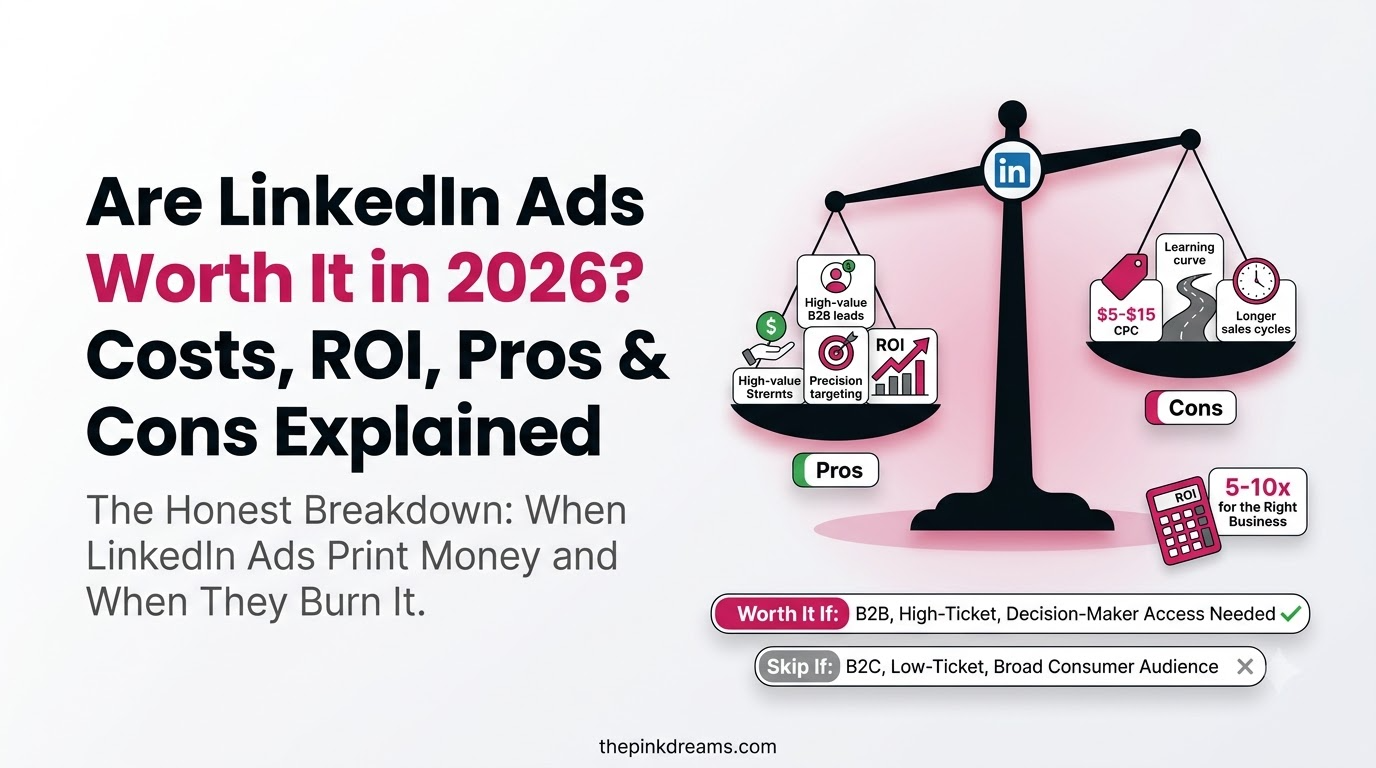
The pros and cons of LinkedIn Ads come down to a single trade: you pay a premium for precision. For the right business that trade is clearly worth it; for the wrong one it is expensive. Here is the honest balance.
The Pros
• Unmatched professional targeting: reach people by job title, seniority, company size, and industry, which no other platform matches.
• Decision-maker access: put your message in front of the exact roles that approve the budget, not just anyone searching.
• High-quality leads: leads come from verified professionals, so a higher share are the right fit for B2B.
• Account-based targeting: upload a list of target companies and reach specific roles inside them.
• Strong for considered sales: ideal for high-value offers with a longer sales cycle and a professional buyer.
The Cons
• High cost per click: among the most expensive in advertising, so budgets go further elsewhere for volume.
• Lower lead volume: precision means a smaller audience, so raw numbers are lower than broad platforms.
• Longer sales cycles: B2B deals take time, so results lag and demand patience to judge fairly.
• Poor fit for low-ticket or consumer offers: the cost per lead is hard to justify without a high deal value.
Key Takeaway: The pros and cons of LinkedIn Ads reduce to one trade: precision at a premium. Worth it for high-value B2B, expensive for anything else.ctly to a Lead Gen Form or a fast, relevant landing page, and keep the promise of the ad and the offer perfectly aligned.
Is LinkedIn Ads ROI Worth It for B2B?
For B2B, LinkedIn Ads ROI is often worth it despite the high click cost, because one closed enterprise deal can pay for many expensive clicks. The key is measuring return on pipeline and revenue influence, not on clicks or impressions, which will always understate LinkedIn’s real contribution to a long sales cycle.
Consider how math works. A broad platform produces many cheap leads at a lower close rate and a smaller deal size. LinkedIn produces fewer, pricier leads, but a higher share are real decision-makers, and the deals they close are larger. For a high-value B2B sale, the expensive lead becomes the cheaper customer once it closes.
The mistake that makes LinkedIn look unprofitable is attribution. B2B buyers touch several channels before buying, and LinkedIn’s influence often happens early, so last-click reporting credits the final search instead. Measured on pipeline influence rather than last click, LinkedIn’s real return is usually far higher than the dashboard first suggests.
Key Takeaway: LinkedIn ROI is real but easy to under-measure. Track pipeline and revenue influenced, not last click, or you will undercount its contribution.
When Are LinkedIn Ads Worth It, and When Are They Not?
LinkedIn Ads are worth it when your buyer is in a specific professional role, your deal value is high, and you can afford a higher cost per lead. They are not worth it when your product is low-ticket, your audience is broad consumers, or you need high volume on a small budget. This table makes the call clear.
| Your situation | Worth it? | Why |
| High-value B2B sale | Yes | One deal justifies the higher cost per lead |
| Selling to specific job titles | Yes | Targets roles no other platform can reach |
| Named target accounts | Yes | Account-based targeting reaches chosen companies |
| Long, considered sales cycle | Yes | Reaches decision-makers early in the journey |
| Low-ticket product | Rarely | Cost per lead is hard to justify on small margins |
| Broad consumer audience | Rarely | Cheaper platforms reach consumers more efficiently |
| High volume on a small budget | No | The premium click price burns a small budget fast |
Key Takeaway: The dividing line is deal value and buyer type. High-value, professional, considered: worth it. Low-value, consumer, high-volume: usually not.
How to Make LinkedIn Ads Worth It
If LinkedIn fits your business, a few practices decide whether the spend pays off. The difference between a campaign that books meetings and one that just spends is rarely the platform; it is targeting, relevance, and measurement.
• Target precisely, not narrowly: two to three facets such as role, seniority, and industry, precise enough to be relevant but broad enough to deliver.
• Lead with value, not a hard sell: a cold professional audience responds to insight and useful content, not an immediate demo request.
• Match the format to the goal: awareness formats to warm, lead gen forms to capture, conversation ads to convert warm prospects.
• Connect to your CRM: so you can measure pipeline and revenue, not just clicks, and see LinkedIn’s true contribution.
• Give it a full sales cycle: judge on qualified leads and pipeline over weeks or months, not on the first fortnight’s clicks.
Done this way, LinkedIn Ads become a predictable B2B lead generation channel rather than an expensive experiment. Relevance turns the premium click price into a reasonable cost per qualified lead.
Key Takeaway: LinkedIn becomes worth it through precision and measurement. Target the right role, lead with value, and judge the pipeline over a full cycle.
The Verdict: Are LinkedIn Ads Worth It for You?
So, are LinkedIn Ads worth it? The honest verdict is a conditional yes. If you sell a high-value, considered product to a specific professional role, LinkedIn is one of the few platforms that can put you directly in front of the people who approve the budget, and a single closed deal can pay for a great many expensive clicks. In that case, the premium is not a cost; it is the price of precision.
If, on the other hand, you sell a low-ticket product, need high volume on a modest budget, or your buyer is a consumer rather than a professional, the answer tips the other way. LinkedIn will still work, but it will work harder for less, and a cheaper channel will reach your audience more efficiently. There is no shame in that verdict; it is simply the wrong tool for that job.
Run yourself through three quick questions. Can your deal value absorb a premium cost per lead? Is your buyer a specific professional role? Can you commit to measuring the pipeline over a full sales cycle rather than judging clicks in week one? If you answered yes three times, LinkedIn Ads are almost certainly worth testing. If not, your budget is better spent elsewhere, and knowing that is worth just as much.
Get an Honest Assessment
If you would rather have specialists tell you straight whether LinkedIn fits, and build it properly if it does, Pink Dreams can help. As a LinkedIn Ads agency working with businesses across the US, the UK, Canada, Australia, and the UAE, we assess fit honestly, build full-funnel campaigns, and connect every click to pipeline. Request a free LinkedIn Ads audit for a straight answer on whether it is worth it for your business.
FAQ
Are LinkedIn Ads worth it for small businesses?
It depends on what you sell. For a small B2B business with a high-value, considered offer, LinkedIn Ads can be worth it because one deal justifies the cost. For a small business selling low-ticket or consumer products, the high cost per click is usually hard to justify, and cheaper platforms deliver better volume.
Why are LinkedIn Ads more expensive than other platforms?
LinkedIn’s higher cost reflects the quality and specificity of its audience data. You are paying for precise access to professional decision-makers by job title, seniority, and company, rather than for broad reach. That precision means less wasted spend on the wrong people, but it comes at a higher price per click.
Do LinkedIn Ads work for lead generation?
Yes. LinkedIn works well for B2B lead generation through sponsored content, lead gen forms, and conversation ads. Its lead gen forms auto-fill from member profiles, reducing friction and lifting completion. The leads are lower in volume but higher in fit, since they come from the exact roles and companies you target.
What is a good ROI for LinkedIn Ads?
There is no universal benchmark, because ROI depends on your deal value, sales cycle, and how you measure influence. A reasonable starting point is to aim for a pipeline-to-spend ratio that comfortably covers your costs. The important thing is to measure ROI on pipeline and revenue influenced, not last-click clicks, which understate LinkedIn’s contribution.
How long does it take to see results from LinkedIn Ads?
Engagement metrics often move within the first couple of weeks, but qualified leads and pipeline follow your sales cycle, which in B2B can be weeks to months. Give campaigns a full window to learn and to let long-cycle deals develop, and avoid judging performance on the first fortnight alone.

Digital Marketing Strategist & Business Coach
As a leading digital marketing strategist and business coach, he is responsible for helping entrepreneurs and brands grow faster in a smarter, more scalable way. With over 20 years of experience, Nagarajan specializes in practical coaching, automation-first marketing strategies, and technology-driven growth systems. His work focuses on enhancing brand visibility, improving performance, and building sustainable frameworks that enable long-term business success.