




Stop guessing at your marketing. This step-by-step plan turns online searches into a full calendar in 90 days.
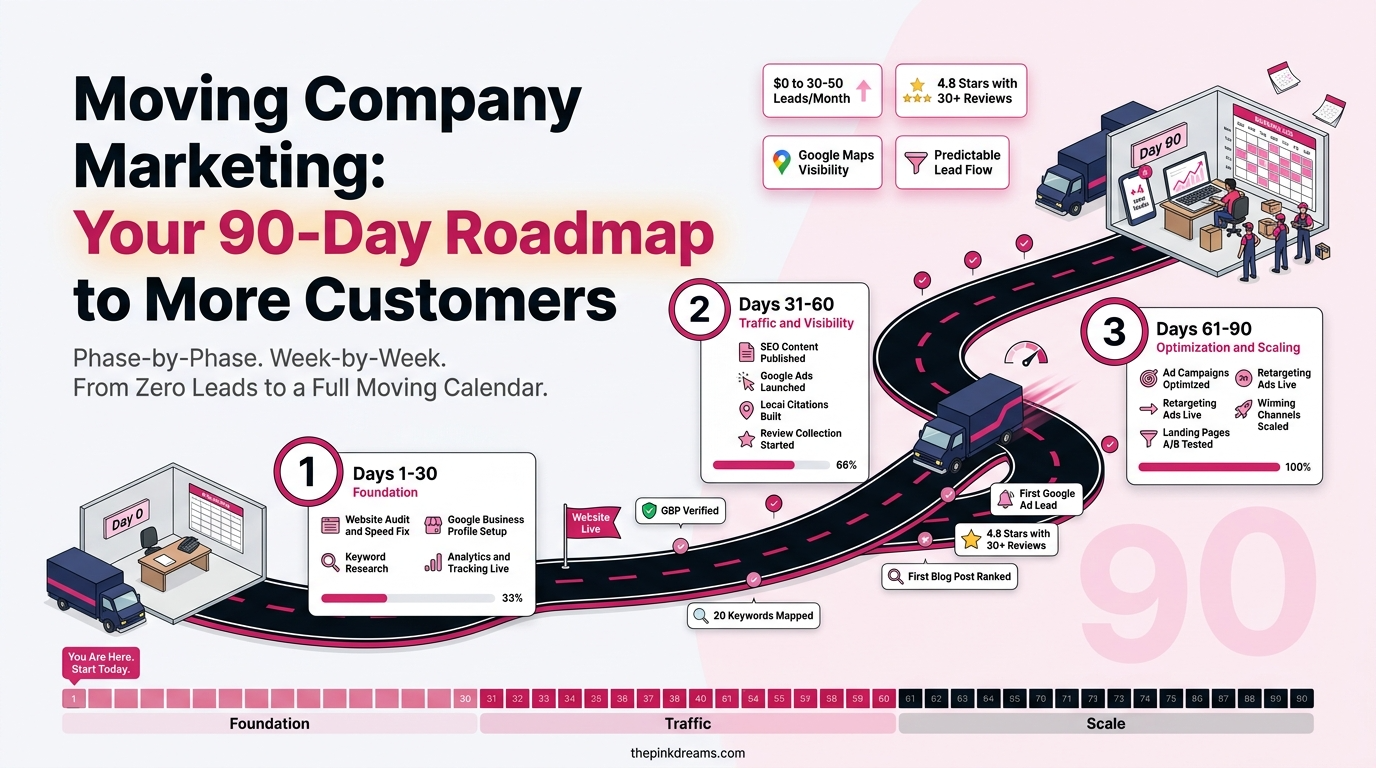
Moving company marketing is how you attract, win, and keep customers through your website, local SEO, ads, reviews, and follow-up. As part of a successful digital marketing for moving companies strategy, a clear plan is what separates a full calendar from a quiet phone. This 90-day roadmap helps you build a strong foundation, grow your reach, and scale the strategies that bring in more booked moves.
Key Takeaways
• Most customers search online before booking, so moving company marketing is now essential, not optional.
• A clear 90-day plan beats scattered ads that waste money without a strategy behind them.
• The three phases build on each other: foundation first, then engagement, then scaling what works.
• Fast follow-up and steady tracking turn leads into booked moves, whichever tactics you run.
Why a Moving Company Marketing Plan Beats Random Tactics
You boosted a post, ran a few ads, maybe paid for a listing, and the money vanished with barely a booking to show for it. That is what happens without a plan. In a competitive moving industry, a steady flow of new leads is the key to growth, and most customers now search online when they need a mover.
The problem is that without a clear plan, movers waste money on ads that do not bring results. Many moving company marketing strategies fail simply because they are not designed with the right steps in mind. The solution is a 90-day roadmap built to double your leads within three months.
This is not a list of generic tips. It is a step-by-step plan for movers, whether you run a small team, a mid-sized business, or a large one. Each phase connects to the next, so your marketing is easier to start, stronger as it grows, and more reliable at delivering results. Whether you do it yourself or work with moving company marketing experts or a moving company marketing agency, this plan shows you exactly where to focus your time and budget. It works whether you operate in Canada, the US, the UK, Australia, or Dubai. Let’s dive in.
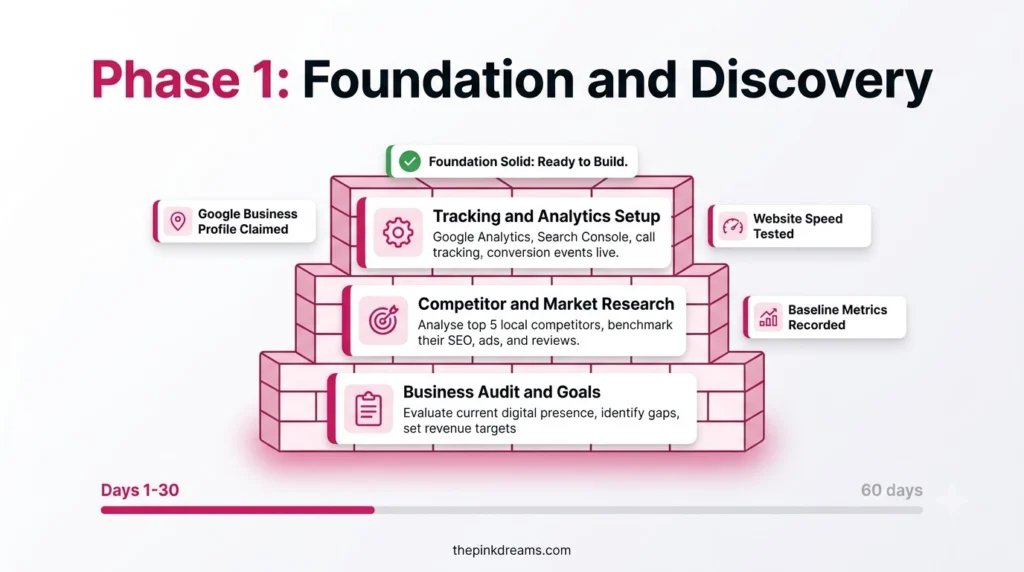
Phase 1: Foundation and Discovery (Days 1 to 30)
The first month is about building a strong base. Without this foundation, your marketing wastes money and fails to attract steady customers. Get these six pieces right before you scale anything.
1. Understand Your Market and Customers
Effective marketing starts with knowing who your customers are, because not everyone wants the same thing. Match your message to each group:
• Families want reliable movers with good insurance.
• Young professionals look for fast, convenient service.
• Students focus on affordability.
• Local businesses need moves that do not interrupt their work, handled by experts.
Identifying each group’s real pain points, like transparent pricing or quick responses, lets you speak directly to what they value. This is the groundwork all good moving company marketing strategies are built on.
2. Research Competitors and Audit Your Marketing
Once you know your customers, study your competitors so you can position your business better. Analyze three to five top movers near you and check:
• How their websites look and what services they offer
• How active they are on social media
• What reviews their customers leave
• Which keywords they use to show up on Google
Note what they do well and where they slip, like ignoring negative reviews or missing services. That gap is where your company stands out, and it tells customers exactly why to pick you.
3. Build and Optimize Your Website
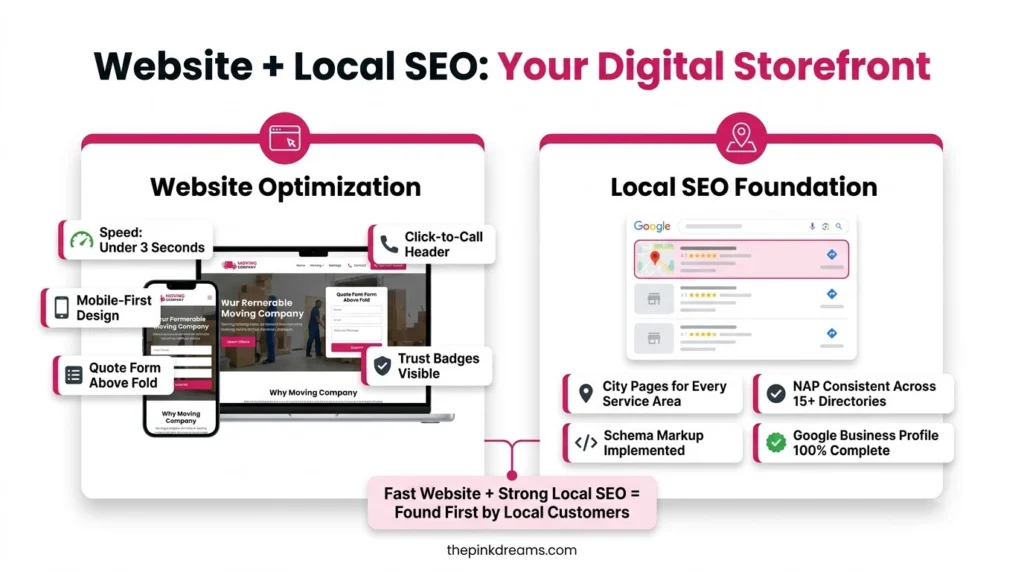
Your website is your best salesperson, working day and night. A good site with strong landing pages brings in leads even when you are busy. To make yours work, and to support your SEO for moving companies:
• Keep it fast and simple: load in under three seconds and stay easy to use.
• Make it mobile-friendly: most people search on phones, so it must look great on any screen.
• Show contact info clearly: phone, email, and a “Get a Quote” form on every page.
• Explain your services: local moves, long-distance moves, and special items.
• Show real reviews: display testimonials to build trust.
• Use local SEO: create a page for each city or service so you rank in local search.
4. Build Your Social and Review Profiles
Many customers check your profiles before they call, so these are key. Prioritise in this order:
• Google Business Profile: the highest priority for local visibility. Fill it with accurate info, hours, photos, and services.
• Facebook and Instagram: stay active, share photos and customer stories, and show your team in action.
• LinkedIn: worth it if you target commercial and corporate moves.
Use real photos of trucks, workers, and happy customers (with permission), and ask every satisfied customer for a Google review. Well-kept profiles build trust and help more leads find you.
5. Set Up Your Ads
Paid ads bring leads quickly while your SEO grows over time. Focus on:
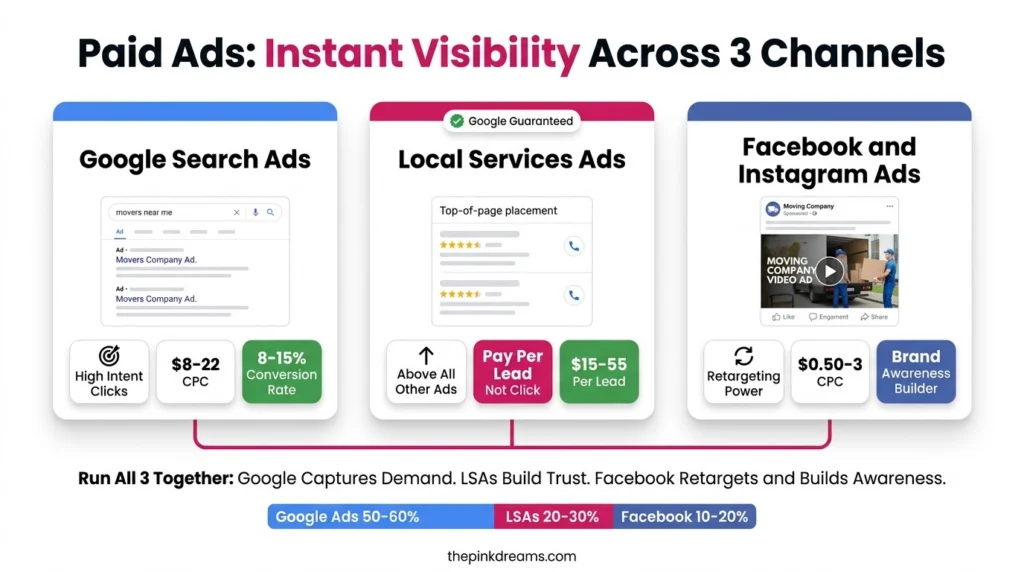
• Google Ads: use local keywords like “movers near me” or “moving company in [your city].”
• Facebook Ads: build awareness and attract leads with clear, simple messaging.
• Google Local Services Ads: get instant visibility at the top of local results.
Start small with a test budget to learn what works and what a lead costs before you spend more. Use plain, clear ads like “Licensed, Insured Local Movers, Free Quote Today,” and install tracking so you know which ads produce calls.
Quick win: Start ads with a small test budget and tracking in place. Learn your cost per lead before you scale spend.
6. Set Your Budget and Plan
A clear budget keeps your marketing from wasting money. A balanced starting split looks like this:
• 40% for paid ads (Google and Facebook)
• 30% for SEO and content (blogs, website improvements)
• 20% for creative assets (photos, videos)
• 10% for tools (CRM, analytics, review management)
This keeps your money pointed at growing leads and winning customers, and it forms the backbone of your moving company marketing plan.
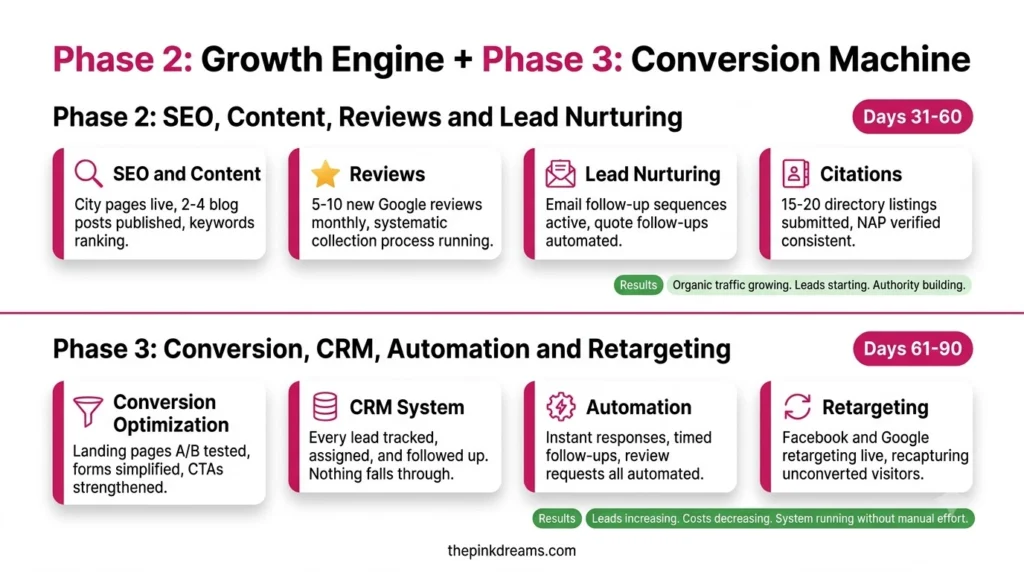
Phase 2: Engagement and Growth (Days 31 to 60)
Now your marketing starts working actively. Ads run, SEO brings traffic, and you build trust with people looking for movers. The goal is to turn your online presence into actual bookings while tracking results and improving as you go.
1. Launch Your Ads
Your ads now drive leads. Use clear, trust-building messages such as:
• Licensed and insured movers, same-day estimates available
• Professional office movers, minimise business downtime
• Affordable local movers, free estimate today
Launch on Google and Facebook around local keywords, track clicks, calls, and bookings to see which ads win, then shift budget behind the ones bringing quality leads. This keeps your spend smart and cost-effective.
2. Grow Your Search Presence With SEO
SEO brings long-term customers by improving your visibility over time. Focus on two areas:
• Local SEO: fully optimize your Google Business Profile, keep photos current, gather reviews, and build service-area pages so you rank for “movers near me” and in Google Maps.
• General SEO: publish useful articles answering real customer questions, like “10 Moving Tips for Families” or “How to Pack Fragile Items Safely.”
This builds authority, drives organic traffic, and earns trust, making it one of the best long-term moving company marketing strategies there is.
3. Create Localised Content and Lead Programs
Go beyond ads with content that helps your local community, like “How to Pack Fragile Items Without Stress” or “Moving Checklist for Families in [your city].” This pulls in visitors and lifts your local search rankings. Then add bigger lead programs:
• Referral programs: reward customers who refer friends and family.
• Partnerships: connect with real estate agents and apartment managers who work with people moving into your area.
Together, these build your reputation and reach faster than ads alone.
4. Build Trust With Social Proof and Testimonials
Most people read reviews before choosing a mover, so social proof is essential. A steady habit to get more moving company reviews keeps this working: collect and display real reviews regularly, share testimonials on your Google Business Profile and social channels, use video testimonials where you can, and reply to every review quickly and politely. Strong proof turns visitors into paying customers far more often.
5. Start Email Lead Nurturing
Many customers do not book right away, so nurture them. Collect emails from quote requests, send automated helpful tips like packing checklists, and include the occasional offer such as “Book now and get 10% off.” Email nurturing is low-cost but powerful for turning interested prospects into customers over time.
6. Track Campaign Performance
You need to see how many calls, visits, and bookings your marketing produces. Use Google Analytics for website behaviour, Google Business Profile Insights for how customers find you, and call tracking numbers to see which campaigns drive calls. Reviewing this regularly tells you what to keep doing and where to spend smarter.
Quick win: Set up call tracking and analytics before you scale. You cannot improve what you cannot measure.
Phase 3: Conversion and Scaling (Days 61 to 90)
Now it is time to sharpen your campaigns, win more customers, and grow profit. This phase turns interest into booked moves and makes your business stronger in the market.
1. Scale Your Winning Campaigns
By day 60 you know which ads and keywords bring the best leads. Now scale them:
• Increase budget on the ads bringing good customers
• Add similar keywords to expand your reach
• Target audiences that look like your best customers
• Test new ad types and promotions to keep things fresh
For example, if a certain spend brought five bookings, try doubling it and watch whether bookings rise in step without costs climbing too fast.
2. Improve SEO and Authority
Building your site’s reputation and content keeps bringing free leads. Write detailed guides (checklists, cost calculators, packing tips), earn backlinks through guest articles and local partnerships, and create a page for each city or neighbourhood you serve. These position you as the trusted local expert and lift your organic traffic.
3. Launch Bigger Lead Initiatives
Go beyond ads and SEO with larger efforts:
• Referral programs with discounts or cash rewards for referrals.
• Corporate packages for local businesses relocating offices.
• Seasonal promotions during busy months like spring and summer.
• Free resources like moving guides in exchange for an email address.
4. Systematize Your Lead Follow-Up
Capturing leads is not enough. Timely, consistent follow-up is where most sales happen, and many movers lose customers by responding too slowly. Systematize it:
• Rapid response: aim to answer every inquiry within five minutes.
• Use a CRM: track every lead so none slips through the cracks.
• Ready-made scripts: keep phone and email replies clear and consistent.
• Persistence: most sales close after several follow-ups, so keep helping, not just selling.
5. Leverage Automation Tools
Automation handles the repetitive work so your team can focus on service. Automate booking confirmations and reminders, lead-nurturing email sequences, website chatbots for instant replies, review requests after each job, and lead routing to the right salesperson. It keeps communication timely without adding to your workload.
6. Launch Retargeting Campaigns
Retargeting reaches people who visited your site but did not book, and since they already know your brand, it is highly cost-effective. Show tailored ads to visitors who abandoned a quote form, offer a small incentive like “Still planning your move? Save $50 if you book today,” and include testimonials to build trust. It turns lookers into bookers.
7. Review Results and Plan Your Next 90 Days
At the 90-day mark, review your performance and make data-driven decisions. Look at your total leads, your best-performing channels by lead quality and ROI, which ads and content converted best, and your cost per new customer. Use those insights to refine your next 90-day plan so your marketing keeps compounding.
Quick win: Block time at day 90 to review the numbers and rebuild the plan. Marketing that keeps improving beats marketing that just keeps running.
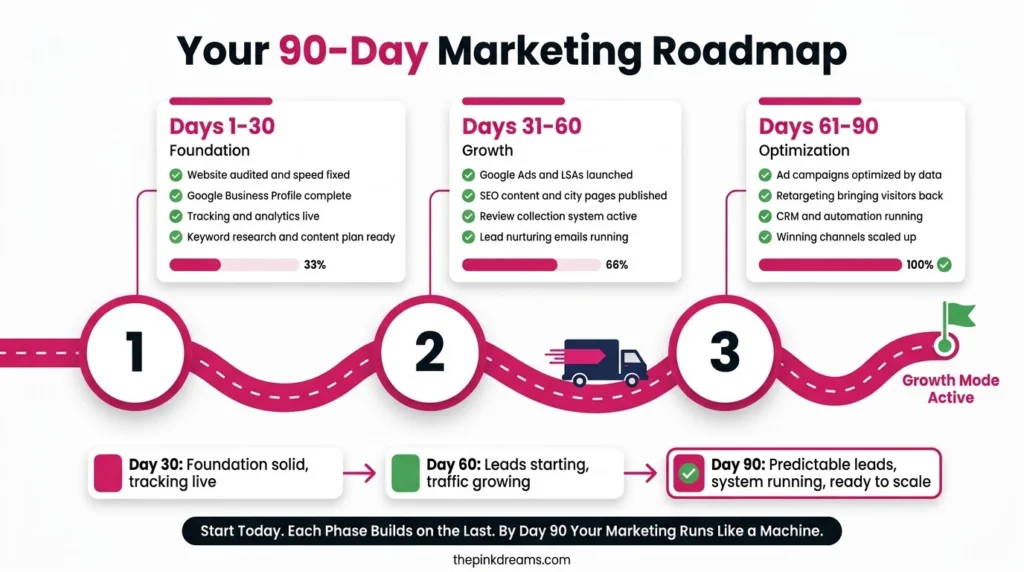
Final Thoughts
To win in today’s moving business, you need marketing that works all year round, not a lucky post here and there. A clear 90-day plan lets you stop guessing and start building a system that brings in customers on repeat.
Build the foundation first: a strong website, solid SEO, and real reviews. Then grow with a mix of ads, helpful content, and marketing tools. Finally, respond to leads fast and use automation to stay in touch with those not ready to book yet. Do these consistently and your business grows step by step.
The key is to start now and keep improving. Whether you run it yourself or bring in experts, moving quickly gets you more bookings and keeps your trucks busy. Your best moving season can begin in just 90 days. And if you would rather hand it off, Pink Dreams can run the whole plan for you across all five markets.
FAQ
What is moving company marketing?
Moving company marketing is everything you do to attract, win, and keep customers: your website, local SEO, Google and social ads, reviews, content, and lead follow-up. Because most people search online before booking a mover, strong marketing is what makes your company the one they find and trust when they are ready to move.
How long does moving company marketing take to work?
A well-run plan starts producing leads within the first few weeks, mostly from ads and your Google Business Profile, while SEO builds over two to three months. This 90-day roadmap is designed to compound: each phase strengthens the last, so results grow steadily rather than arriving all at once.
What is the best moving company marketing strategy?
There is no single best tactic. The strongest approach combines a fast, mobile-friendly website, local SEO, targeted ads, genuine reviews, and quick follow-up, run as one connected plan. Ads bring leads now, SEO builds free traffic over time, and follow-up converts both. Together they outperform any single channel.
Should I hire a moving company marketing agency or do it myself?
You can run this plan yourself, especially the foundation work. The ongoing part, adjusting ads, publishing content, following up fast, and tracking results, is where many owners fall behind. If that upkeep keeps slipping, moving company marketing experts or an agency can run it for you and free you to focus on moves.
How much should a moving company spend on marketing?
It depends on your size and goals, but a balanced starting split is roughly 40% on ads, 30% on SEO and content, 20% on creative, and 10% on tools. Start at a level you can sustain, track your cost per booked job, and shift budget toward whatever produces the most bookings.

Digital Marketing Strategist & Business Coach
As a leading digital marketing strategist and business coach, he is responsible for helping entrepreneurs and brands grow faster in a smarter, more scalable way. With over 20 years of experience, Nagarajan specializes in practical coaching, automation-first marketing strategies, and technology-driven growth systems. His work focuses on enhancing brand visibility, improving performance, and building sustainable frameworks that enable long-term business success.