




A simple guide to creating content that attracts customers and drives more booked moves.
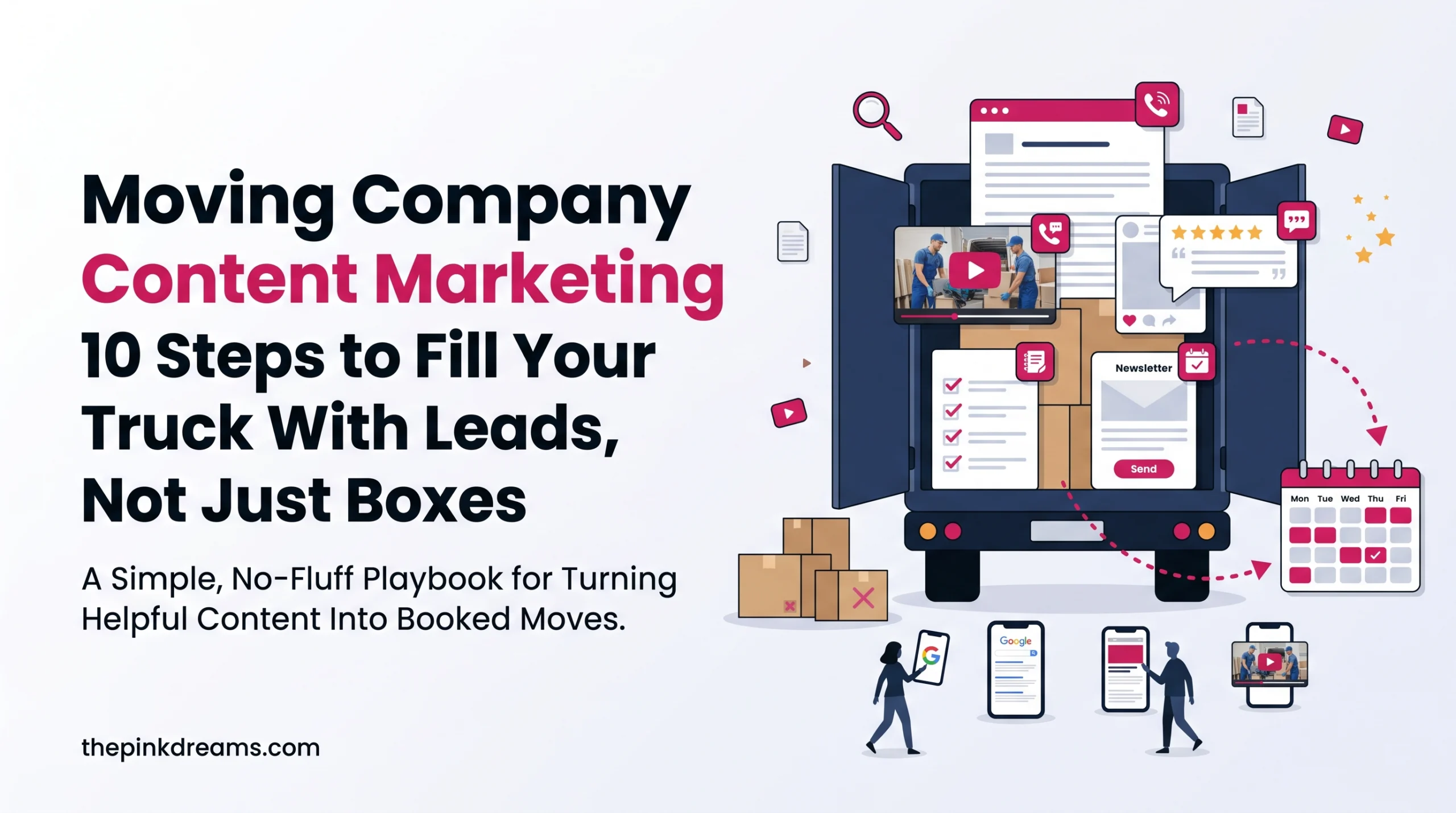
Moving company content marketing is the practice of creating helpful content, such as blog posts, videos, checklists, and social media posts, that answers customer questions, builds trust, and attracts booking-ready leads. Success comes from understanding your audience, creating content for every stage of the moving journey, optimising for local search, promoting what you publish, and measuring what actually brings in customers and that starts with the right content writing.
Key Takeaways
- Content marketing wins leads by building trust before a customer ever asks for a quote.
- The content that works answers real moving questions instead of simply promoting your services.
- Optimising your content for local search is what puts you in front of people searching for a mover nearby.
- Publishing is only half the job. Promoting and tracking your content is the other half.
Moving Company Content Marketing That Brings More Leads
Your next moving customer is searching Google right now. The question is, will they find your content or your competitor’s?
Most moving companies treat content like a chore. They post a truck photo, write one blog nobody reads, and then disappear for months. Meanwhile, the mover across town shows up every time a local family searches “how much does it cost to move,” and quietly turns those searches into moving leads. Guess who gets the call?
Here is the thing about content marketing for moving companies: it is not about posting more. It is about posting the right stuff, in the right places, so the people planning a move find you before they find your competitor.
Do it well and your content works like a salesperson who never sleeps. It answers questions at 2 a.m., builds trust while you are on a job, and fills your calendar with qualified leads instead of your inbox with spam.
Here are 10 simple steps to make that happen. They work whether you run a company in Canada, the US, the UK, Australia, or Dubai. Let’s dive in.
1. Know exactly who you are talking to
You cannot write helpful content for “everyone who moves.”
So get specific. A busy family relocating across town has different worries than a college student moving into a first apartment or a business relocating an office. Each one Googles different things.
Picture your top few customer types and the questions that keep them up at night:
• Families: “How do I move with kids and pets?”
• Renters: “What does a one-bedroom move cost?”
• Downsizers: “What do I do with everything I am not keeping?”
• Businesses: “How do we move an office without losing a workday?”
Quick win: Write down your three most common customer types and one real question each. That list is your first month of content.
2. Map your content to the moving journey
Nobody books a mover the second they think about it.
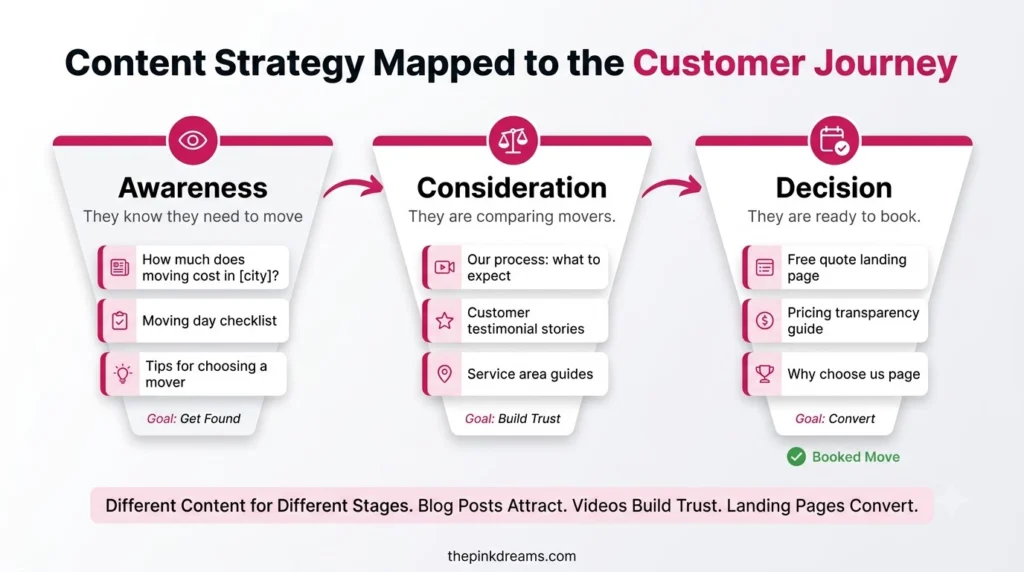
The best content strategies for moving companies follow the customer through stages, from “I need to move” to “booked and confirmed.” Your content should meet them at each one:
• Awareness: “Where do I even start?” Answer with how-to guides and packing tips.
• Consideration: “Which company do I trust?” Answer with reviews, case studies, and behind-the-scenes videos.
• Decision: “I am ready to book.” Answer with clear quote pages and simple offers.
Match the content to the stage and you guide someone from curious to committed without ever hard-selling.
3. Pick the formats that actually pull their weight
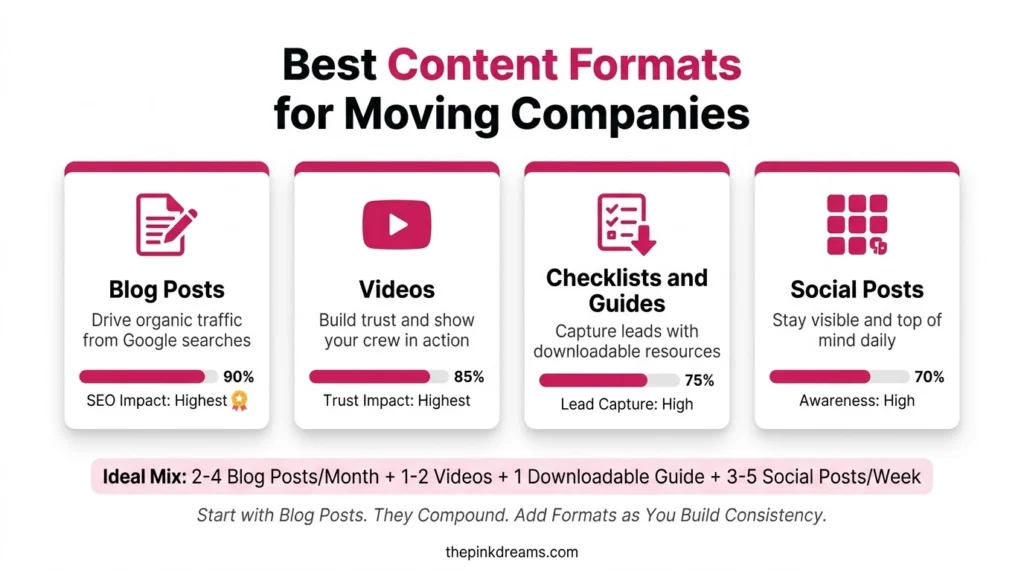
You do not need to do everything. You need the few formats your audience actually consumes.
Here is a quick sheet:
| Format | Best for | Example |
| Blog posts | Ranking on Google, answering questions | “What does a local move cost?” |
| Videos | Building trust fast | A crew wrapping furniture |
| Checklists | Capturing emails | A downloadable moving checklist |
| Social posts | Staying visible | A timelapse of a truck loading |
A mix beats a single format, because it catches different people at different moments. But if you only have time for two, start with blog posts and short video. They do the heaviest lifting for movers.
4. Write blog posts that answer real questions
Your moving company blog is your workhorse for showing up on Google.
But only if it answers something people actually search. Skip the “welcome to our blog” posts. Research the moving company keywords real customers type, then write the stuff a stressed mover asks at midnight:
• “How much does it cost to move to a three-bedroom home?”
• “How do I pack fragile items so nothing breaks?”
• “What is the best time of year to move?”
• “How do I get a moving permit in my city?”
Answer clearly, lead with the answer, and you give Google a reason to rank you and a reader a reason to trust you.
Quick win: Use Google’s “people also ask” box for free. It hands you the exact questions to turn into your next posts.
5. Use video marketing for movers to build trust fast
Moving is a trust business. People are letting strangers carry everything they own.
Video marketing for movers shortcuts that trust like nothing else. A quick clip of your crew wrapping a couch or loading a truck says “these people are careful” faster than any paragraph. And it does not need to be polished. Real beats fancy.
Easy videos to start with:
• A timelapse of a truck being loaded
• A 30-second packing tip
• A happy customer on moving day (with permission)
• A quick tour of your team and vehicles
6. Optimize everything with local SEO for movers
Great content nobody sees is a waste of time. Local SEO for movers is how people nearby find it.
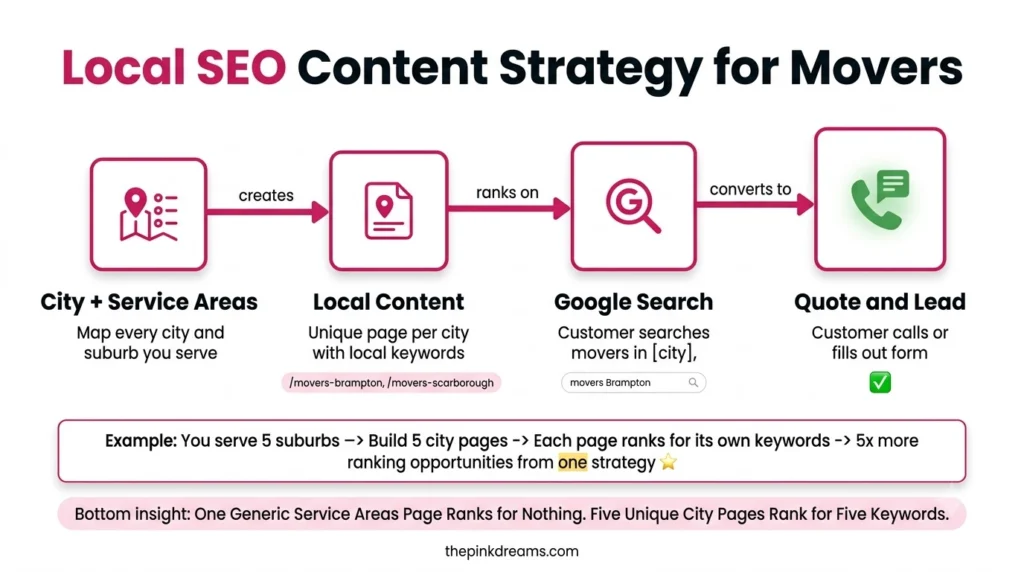
Because a mover in Austin does not need traffic from Boston. You need the family three suburbs over. So make your content unmistakably local:
• Name your city and service areas in titles and headings
• Use terms like “movers in [city]” and “long-distance moving from [city]”
• Link your content to your quote page and contact page
• Mention real neighbourhoods, building types, and local quirks
Quick win: Add your city to your best blog post’s title and headings today. It is the fastest local-SEO fix there is.
7. Turn customers into your best content
Your happy customers are a content goldmine. You just have to ask.
Reviews, testimonials, and referral stories are the most convincing content marketing for movers you can publish, because they come from someone with nothing to sell. If you want more of them, it helps to have a simple system to get more moving company reviews. Research suggests customer testimonials lift engagement noticeably.
Put them to work:
• Feature a short review on a service or location page
• Film a quick testimonial on moving day
• Turn a great story into a mini case study, like a tricky office move that went smoothly
8. Promote what you publish
Here is where most movers drop the ball. They hit publish and stop.
But publishing is only half of moving company marketing. If nobody sees your content, it cannot book a move. So push every piece out:
• Share blog posts on your social channels
• Drop a helpful tip into your email marketing for moving companies list
• Post short clips of your video content
• Add your best guide as a free download to capture emails
One good blog can become five social posts, an email, and a lead magnet. Squeeze every piece for all it is worth.
9. Repurpose instead of always starting over
You do not need endless new ideas. You need to reuse the good ones.
Content marketing is not one-and-done. A single strong blog post can turn into:
• A carousel of social snippets
• A short explainer video
• An infographic summarising the key tips
• A section of your email newsletter
Repurposing saves hours and puts your expertise in front of people who missed it the first time.
10. Track what books jobs, then do more of it
If you are not tracking, you are guessing.
You do not need a fancy dashboard. Just watch a few numbers each month and let them guide you:
• Which blog posts drive quote form submissions
• Which videos get the most views and shares
• Which pages turn visitors into calls
• Where your leads say they found you
Then double down on what works and quietly retire what does not. That is the whole loop.
Quick win: Pick one metric that ties to booked jobs, like quote form fills, and check it monthly. It beats tracking everything.
Final thoughts
Content marketing is not about filling a blog for the sake of it.
It is about being the moving company that shows up, helpfully, at every step of someone’s move. When you answer their questions before they ask, you earn trust. And trust is what fills your truck with paying jobs, not just boxes.
You do not have to run all 10 steps at once. Know your audience, write one genuinely helpful local post, and share it everywhere. Then repeat. Momentum builds fast. And if you would rather hand the whole thing off, Pink Dreams content writing team can run it for you across all five markets.
FAQ
What is content marketing for a moving company?
It is creating helpful content, like blog posts, videos, checklists, and social media, that answers customer questions and builds trust so people choose you when they are ready to book. The goal is to be useful first, which earns the lead, rather than pushing constant sales messages.
How long does content marketing take to bring in leads?
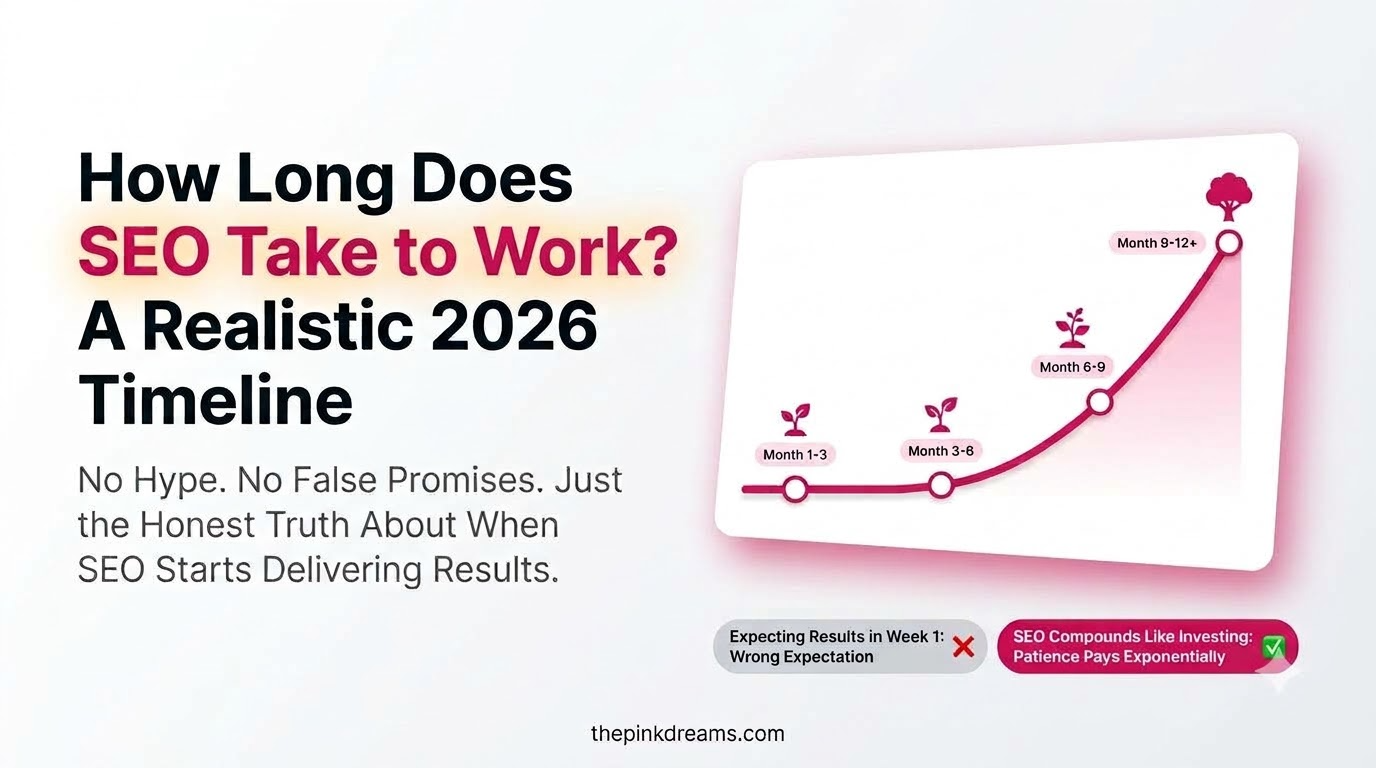
It builds over time rather than overnight. Local blog posts and videos can start pulling in traffic within a few weeks, but the real momentum usually shows over three to six months of consistent publishing. Unlike paid ads, that content keeps working long after you publish it.
How often should a moving company post content?
Consistency beats volume. A realistic starting point is one or two quality pieces a week, whether that is a blog post, a short video, or both. It is better to publish one genuinely helpful piece a week than five rushed ones, then go quiet.
Do I need video, or is a blog enough?
A blog alone can work, but video builds trust faster in a business this personal. You do not need a studio. A simple phone clip of your crew working carefully often does more to win a nervous customer than a page of text. Start with blogs, then add short video.
What is the single best piece of content to start with?
A local cost or how-to guide, like what a move costs in your city or how to pack fragile items. It answers a question nearly every customer has, ranks well locally, and gives you something to share across email and social. Start there, then build out.

Digital Marketing Strategist & Business Coach
As a leading digital marketing strategist and business coach, he is responsible for helping entrepreneurs and brands grow faster in a smarter, more scalable way. With over 20 years of experience, Nagarajan specializes in practical coaching, automation-first marketing strategies, and technology-driven growth systems. His work focuses on enhancing brand visibility, improving performance, and building sustainable frameworks that enable long-term business success.