



LinkedIn stopped being a resume site years ago. In 2026 it is where B2B attention, trust, and pipeline are won.
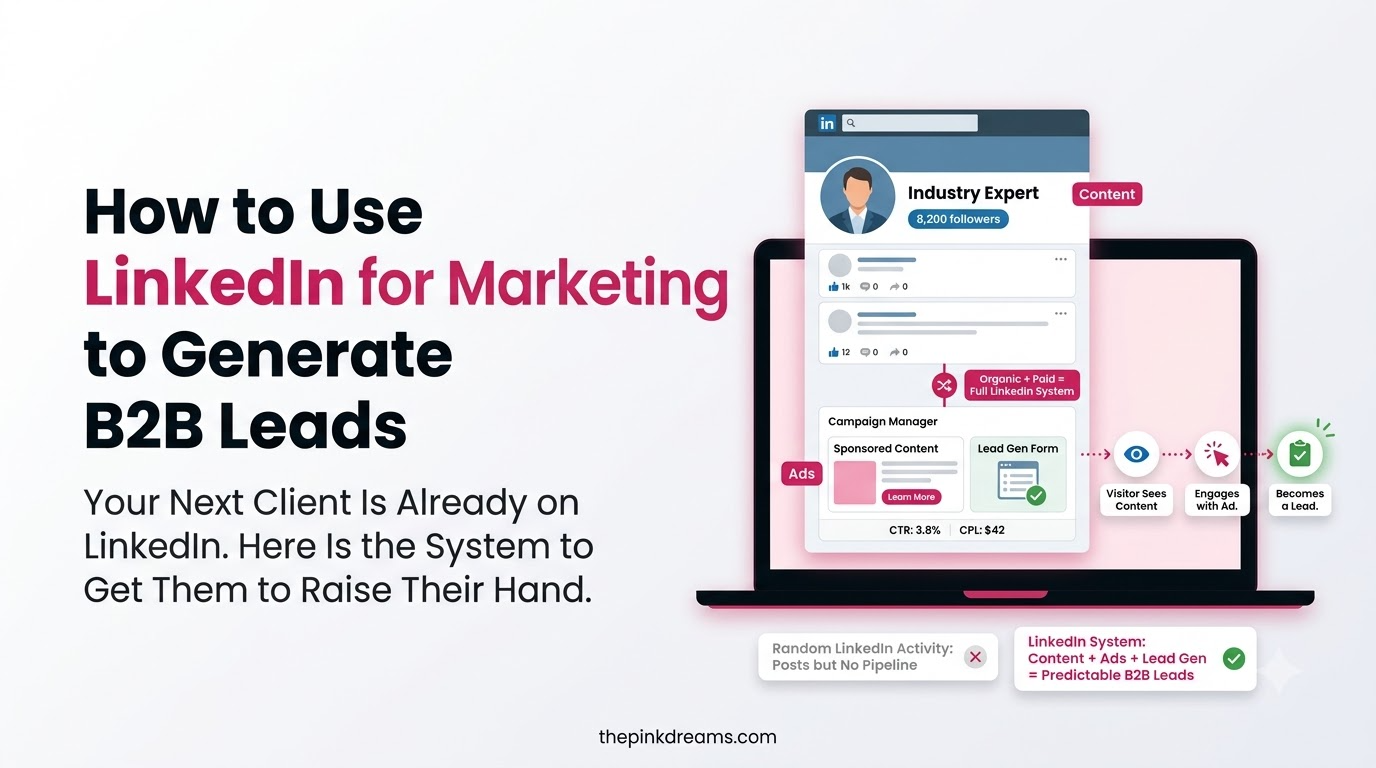
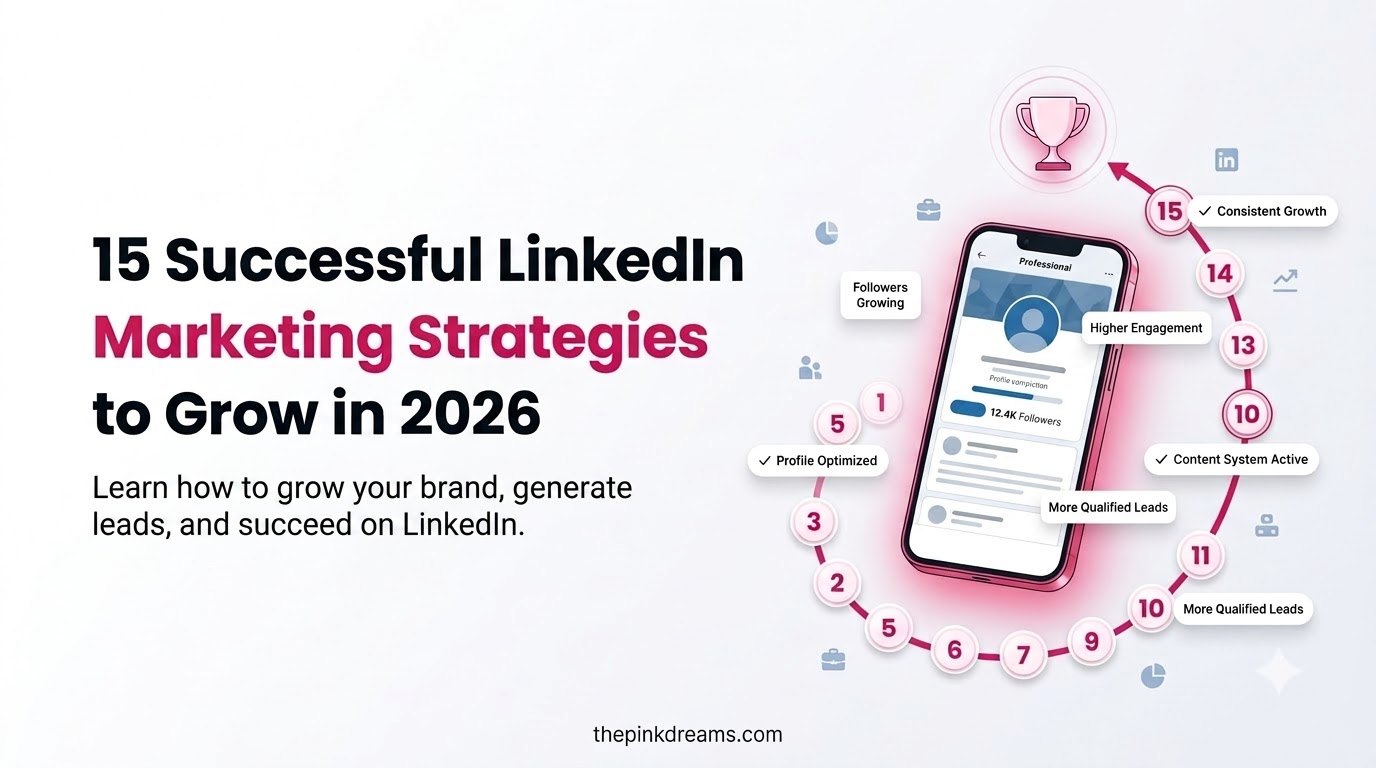
The most successful marketing strategies on LinkedIn in 2026 combine consistent, value-first content, a strong personal and company presence, active engagement, and precise targeting through both organic reach and paid ads. Working with a professional LinkedIn Ads Agency can also help you build, optimize, and scale paid campaigns that generate qualified B2B leads alongside your organic efforts. The fifteen strategies below cover content, profiles, community, employee advocacy, analytics, and advertising, each with what to do and why it works.
Key Takeaways
- Consistent, value-first content beats sporadic promotional posting on LinkedIn every time.
- Personal profiles and executive presence now out-reach company pages for most B2B brands.
- Engagement is a strategy, not an afterthought: commenting and conversation build reach and trust.
- Employee advocacy multiplies organic reach at zero media cost.
- Pair organic reach with paid LinkedIn ads to target the exact decision-makers you cannot reach organically.
- Measure on pipeline and cost per qualified lead, not likes and impressions.
- The fundamentals travel across regions; language, timing, and compliance are localised.
Why LinkedIn Marketing Matters in 2026
LinkedIn marketing matters because it is where professional buyers now spend attention, research vendors, and make decisions. It combines a large professional audience with precise targeting by role and company, and an algorithm that rewards genuine engagement over polished broadcasting. For B2B, no other platform reaches decision-makers as directly.
What has changed is the shift from broadcasting to conversation. The successful marketing strategies on LinkedIn in 2026 look less like advertising and more like showing up consistently with something useful to say. That is why these tactics sit at the centre of any serious LinkedIn marketing programme rather than being treated as occasional posting.
This guide covers fifteen strategies across content, profile optimization, community, advocacy, analytics, and paid ads. Together they form a system: organic presence builds trust, engagement compounds reach, and advertising targets the exact accounts you cannot reach organically. It applies to any B2B business, from a two-person startup to a global brand.
“People do not buy from faceless brands. They buy from people they have come to trust.” (a widely shared B2B marketing principle)
15 Successful LinkedIn Marketing Strategies for 2026
These are the best LinkedIn marketing strategies working right now, ordered roughly from foundation to advanced. Start at the top: the fundamentals make everything below them work harder.
1. Post consistently with value-first content
The single highest-return habit is showing up regularly with content that helps rather than sells. Among LinkedIn content marketing strategy choices, consistency beats volume: a few genuinely useful posts a week compound faster than a daily stream of promotion.
Do this: Commit to a sustainable cadence, two to four posts a week, each teaching one useful thing. Lead with insight, keep the sell light, and write the way you would speak to a peer.
2. Optimize your personal profile as a landing page
Your profile is the first thing prospects check. Treat it as a conversion page, not a CV: a clear headline stating who you help and how, a banner that reinforces it, and an about section built around the reader’s problem rather than your job history.
Do this: Rewrite your headline around outcomes, add a professional photo and branded banner, and make the first two lines of your about section speak to the customer’s pain point.
3. Build a strong company page
The company page is where interested prospects verify you are real and active. An abandoned page raises doubt; a maintained one with regular posts, a clear description, and consistent branding builds confidence and supports your paid campaigns.
Do this: Complete every field, post regularly, keep branding consistent with your site, and confirm credentials and links are current before running any ads that point to it.
4. Lead with your best content format for reach
Different formats serve different goals. Text and document posts drive comments and dwell time; native video and image posts drive reach; polls spark quick interaction. The best LinkedIn marketing strategies mix formats to match the objective of each post.
Do this: Rotate formats deliberately. Use documents and text for depth, native video for reach, and polls to restart engagement, then double down on whatever your analytics show is working.
5. Master engagement as a growth channel
Reach on LinkedIn is earned in the comments as much as in the post. Replying thoughtfully to others, commenting on prospects’ posts, and joining relevant conversations all expand your visibility and build familiarity before any sales approach.
Do this: Spend fifteen minutes a day commenting substantively on posts from prospects and peers. Reply to every comment on your own posts within the first hour, when the algorithm is watching.
6. Activate employee advocacy
Your team’s combined networks dwarf your company page. When employees share and engage with your content, organic reach multiplies at no media cost, and posts from real people outperform posts from a brand logo.
Do this: Make sharing easy: give employees ready-to-post drafts they can personalize, and recognise participation. Encourage authentic commentary over copy-paste reposting.
7. Publish native articles and a newsletter
Long-form content builds authority and gives the algorithm more to work with. A LinkedIn newsletter notifies subscribers of every issue, turning one-time readers into a recurring audience, which is one of the most durable LinkedIn marketing strategies for marketers building a following.
Do this: Publish one substantial article a month around a real audience question, launch a newsletter to capture subscribers, and repurpose each article into several shorter posts.
8. Build or join niche communities and groups
Focused communities put you in front of a self-selected, relevant audience. Whether you build your own group or contribute genuinely to existing ones, the value comes from useful participation, not promotion.
Do this: Join a handful of active, relevant groups and contribute real insight weekly. If you build your own, seed it with genuinely useful discussion before any promotion.
9. Use LinkedIn events for webinars and networking
Events and webinars are strong lead magnets. LinkedIn’s event tools promote to attendees’ networks, extending reach beyond your own audience, and the registration itself qualifies interest.
Do this: Run a regular session on a real audience problem, promote it as a LinkedIn event, and follow up personally with registrants who did not attend, since the recording captures their interest too.
10. Personalize your company page and content for each region
A single generic message underperforms a locally relevant one. If you serve multiple markets, tailor your content, examples, and language to each so it reads as written for that audience rather than translated at them.
Do this: Adapt examples, currency, and language per market. In bilingual regions, post in both languages so local buyers see themselves in the content.
11. Use analytics to guide every decision
Guessing wastes effort. LinkedIn’s analytics show which posts, formats, and times actually drive engagement and clicks, so you can do more of what works and stop what does not. This is where good LinkedIn marketing strategies best practices separate from busywork.
Do this: Review post analytics weekly. Track reach, engagement rate, and clicks by format and topic, then let the data set next month’s content plan.
12. Post on a data-informed schedule
Timing affects reach because early engagement signals the algorithm to show a post more widely. The best window varies by audience, so test rather than copy a generic “best time to post” chart.
Do this: Test posting around mid-morning on weekdays and mid-week afternoons, then use your own analytics to confirm when your specific audience engages most.
13. Strengthen executive personal branding
Leaders carry outsized reach and trust. When founders and senior leaders post in their own voice, their content out-performs the company page and humanises the brand, which is one of the most effective LinkedIn marketing strategies for building authority.
Do this: Help two or three leaders post weekly in their own voice, sharing lessons, opinions, and behind-the-scenes perspective rather than corporate announcements.
14. Run LinkedIn Ads to reach the exact decision-makers
Organic reach has limits. Paid LinkedIn ads let you target by job title, seniority, and company to reach the specific decision-makers you cannot reach organically, and they pair naturally with the awareness your content builds.
Do this: Layer sponsored content and conversation ads over your best-performing organic posts, target two to three professional facets, and measure on cost per qualified lead.
A specialist can accelerate this: a good LinkedIn Ads agency builds, targets, and tests campaigns so paid reach reinforces your organic presence rather than running beside it.
15. Measure results on pipeline, not vanity metrics
Likes and impressions describe activity; pipeline describes results. The strategies above only matter if they produce qualified conversations and revenue, so track the funnel from post through to closed deals, which is what turns LinkedIn marketing into B2B lead generation rather than content for its own sake.
Do this: Define one or two outcome metrics, such as qualified leads or booked meetings, and judge every strategy against them. Feed the result back into what you post and promote.
LinkedIn Marketing Strategies for Startups on a Small Budget
Marketing strategies for startups on LinkedIn lean on the free levers first, because a founder’s personal profile and consistent, useful content cost nothing but time and out-perform a thin ad budget in the early days. Build audience and authority organically, then add paid reach once you know what converts.
• Lead with the founder’s profile: a personal voice out-reaches a new company page and builds trust faster.
• Post consistently before you pay: prove what resonates organically before spending on ads.
• Engage manually: commenting and direct conversation cost nothing and build real relationships.
• Add paid selectively: once a message converts organically, amplify that exact message with a small, tightly targeted ad budget.
Key Takeaway: Startups win on LinkedIn by using the free levers hardest first: founder presence, consistent content, and genuine engagement, then paid to scale what already works.
Common Mistakes That Undermine LinkedIn Marketing
Even a strong plan can be undone by a few avoidable errors. Each quietly caps your reach or wastes your effort, and each has a simple fix.
• Inconsistency: sporadic posting never builds momentum. Commit to a sustainable cadence.
• Selling too soon: leading with the pitch kills reach. Lead with value, earn the sale later.
• Broadcasting, not engaging: ignoring comments forfeits the reach engagement earns. Reply and converse.
• Relying only on the company page: personal profiles out-reach it. Activate people, not just the logo.
• Chasing vanity metrics: likes are not pipeline. Measure qualified leads and revenue.
• Copying a generic posting calendar: test your own audience rather than assuming a benchmark applies.
Key Takeaway: Most LinkedIn marketing fails on consistency, selling too soon, and silence, not on strategy. Fix those three and reach rises.
Growing on LinkedIn With the Right Marketing Strategies in 2026
The successful marketing strategies on LinkedIn in 2026 are not clever hacks. They are a system: show up consistently with useful content, optimize the profiles buyers actually check, engage rather than broadcast, let your team and leaders amplify reach, and use paid ads to target the exact accounts your content has warmed. Analytics and pipeline tell you where to lean in.
Start with the foundation, because it makes everything above it work harder: consistent value-first content and optimized personal and company profiles. Then layer on engagement, advocacy, community, and events, and add paid ads once you know which message converts. Measure on pipeline, not likes, and the compounding takes care of itself.
Quick Recap
Post consistently with value-first content, optimize your personal and company profiles, and make engagement a daily habit. Amplify with employee advocacy and executive branding, build depth through articles, newsletters, communities, and events, and target the exact decision-makers with paid ads. Localise language, timing, and consent per region, and measure everything on pipeline rather than vanity metrics.
Action Checklist
• Commit to two to four value-first posts a week
• Rewrite your personal profile as a conversion page
• Complete and maintain your company page
• Rotate content formats and track which perform
• Spend fifteen minutes a day engaging on others’ posts
• Give your team ready-to-share, personalize-able content
• Publish a monthly article and launch a newsletter
• Run a regular LinkedIn event or webinar
• Review analytics weekly and let data set the plan
• Layer in targeted LinkedIn ads and measure on pipeline
Next Steps
Pick the foundation strategies first, content consistency and profile optimization, and run them for a full month before adding the amplification and paid layers. Review your analytics weekly, and let qualified leads, not likes, decide where you invest more effort and budget.
And if you would rather leave it to the experts, Pink Dreams can help. As a LinkedIn Ads agency working with businesses across the US, the UK, Canada, Australia, and the UAE, we build organic and paid LinkedIn programmes, connect every post and campaign to pipeline, and continuously test what converts. Request a free LinkedIn marketing audit to see where your fastest gains are.
FAQ
What are the most successful LinkedIn marketing strategies in 2026?
The most successful strategies combine consistent, value-first content, optimized personal and company profiles, active engagement, employee advocacy, and paid ads that target specific decision-makers. Together they form a system where organic presence builds trust and advertising reaches the exact accounts you cannot reach organically.
How often should I post on LinkedIn?
Consistency matters more than volume. Two to four quality posts a week, each teaching one useful thing, compounds faster than daily promotional content. Test your own analytics to confirm the cadence and timing your specific audience responds to, rather than copying a generic benchmark.
Should startups prioritise the company page or the founder’s profile?
For most startups, the founder’s personal profile comes first. A personal voice out-reaches a new company page and builds trust faster, while the company page serves mainly to verify legitimacy. Build both, but invest the early effort in the founder’s presence and consistent, useful posting.
Which content formats work best on LinkedIn?
It depends on the goal. Text and document posts drive comments and dwell time, native video and images drive reach, and polls spark quick engagement. The best LinkedIn marketing strategies rotate formats to match each post’s objective, then double down on whatever the analytics show is working for your audience.
Are LinkedIn Ads worth it alongside organic content?
Yes, when used together. Organic content builds trust and awareness at no media cost, while paid ads target the exact decision-makers you cannot reach organically. Running both, with ads amplifying your best-performing organic messages, usually delivers a lower cost per qualified lead than either alone.

Digital Marketing Strategist & Business Coach
As a leading digital marketing strategist and business coach, he is responsible for helping entrepreneurs and brands grow faster in a smarter, more scalable way. With over 20 years of experience, Nagarajan specializes in practical coaching, automation-first marketing strategies, and technology-driven growth systems. His work focuses on enhancing brand visibility, improving performance, and building sustainable frameworks that enable long-term business success.