Introduction
The biggest challenge most moving companies face is not the quality of their service. It is finding enough customers to keep the trucks rolling. Consistent lead generation for moving companies is what separates movers who are booked solid from those scrambling for jobs week to week.
The problem is that most moving companies rely on just one or two sources for leads, usually referrals and maybe a listing on a lead aggregator platform. When referrals slow down or shared leads get too expensive, the phone stops ringing. That is not a business model. That is a gamble.
This guide gives you 10 proven lead generation tactics specifically designed for moving companies. Each tactic includes what it is, why it works, and step-by-step instructions so you can implement it today. These are not theories. They are the strategies that keep successful movers consistently busy across every season.
Why Lead Generation Is Critical for Movers
Consistent Bookings: A steady lead pipeline means you are not scrambling during slow months. You can plan your crew schedules, truck allocations, and growth targets with confidence instead of reacting to whatever comes in.
Business Growth: You cannot grow a moving company on referrals alone. To add trucks, hire crews, or expand to new service areas, you need predictable lead volume that scales with your ambitions.
Competitive Advantage: With over 16,000 moving companies in the US, the movers who invest in lead generation capture market share from those who do not. The phone rings for the businesses customers can find, not the ones doing great work in obscurity.
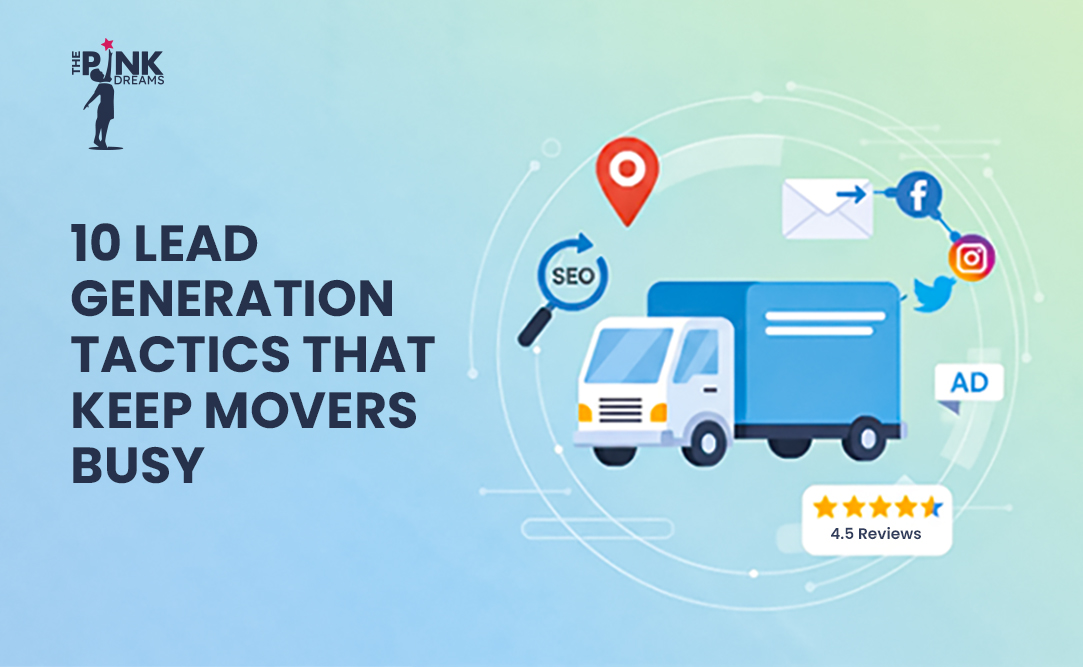
10 Lead Generation Tactics That Keep Movers Busy
1. Optimize Your Google Business Profile
Your Google Business Profile (GBP) is the single most important free lead generation tool available to any local moving company. When someone searches “movers near me” on their phone, the first thing they see is the Local Pack: three businesses shown on a map at the top of Google results. Getting into that pack means free, high-intent leads from people ready to hire a mover right now.
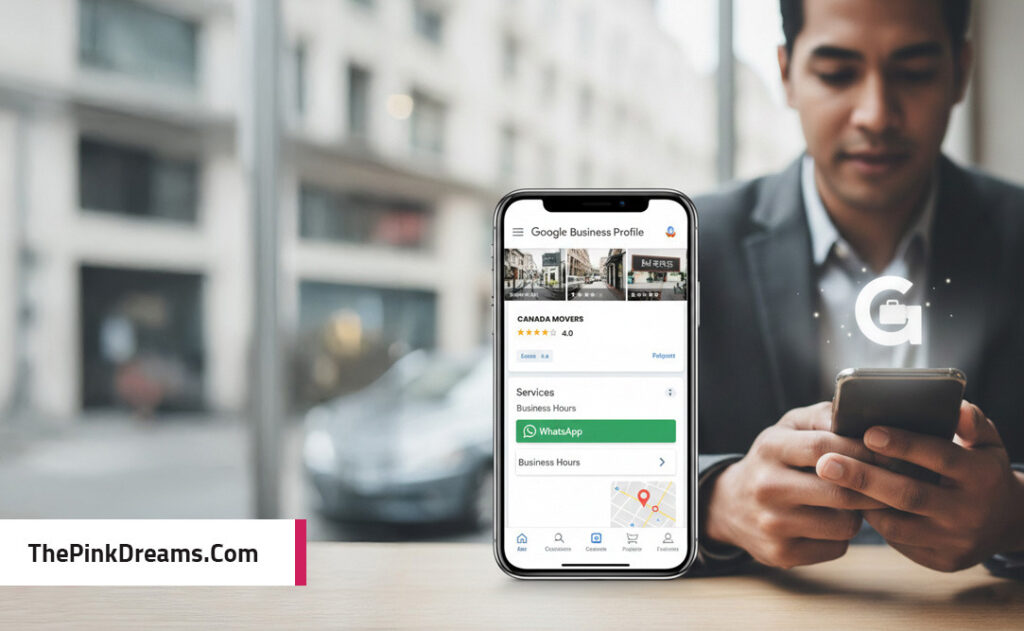
Why it works: GBP leads are among the highest converting leads you will ever get because these customers are actively searching for your service in your area. They are not browsing. They are deciding.
How to implement it:
- Claim and verify your profile at business.google.com if you have not already
- Fill out every field: business name, address, phone, website, hours, categories, service areas, and a detailed business description with your target keywords
- Upload at least 15 high-quality photos: your team, your trucks, your office, and completed moves
- Select “Moving Company” as your primary category. Add secondary categories like “Moving and Storage Service” or “Office Moving Service”
- Post updates, tips, or offers at least once a week to signal that your business is active
- Enable messaging so customers can contact you directly through your listing
Scenario: A moving company in Calgary added 20 new photos, completed every field, and started posting weekly. Within 6 weeks, their GBP views increased by over 40% and they started receiving 3-5 additional calls per week directly from their listing, all without spending a dollar on ads.
2. Invest in Local SEO
Local SEO is the process of optimizing your online presence, so your website ranks higher when people in your area search for moving services. Unlike paid ads that stop the moment you pause your budget, local SEO for moving companies builds a long-term traffic source that delivers leads month after month for free.
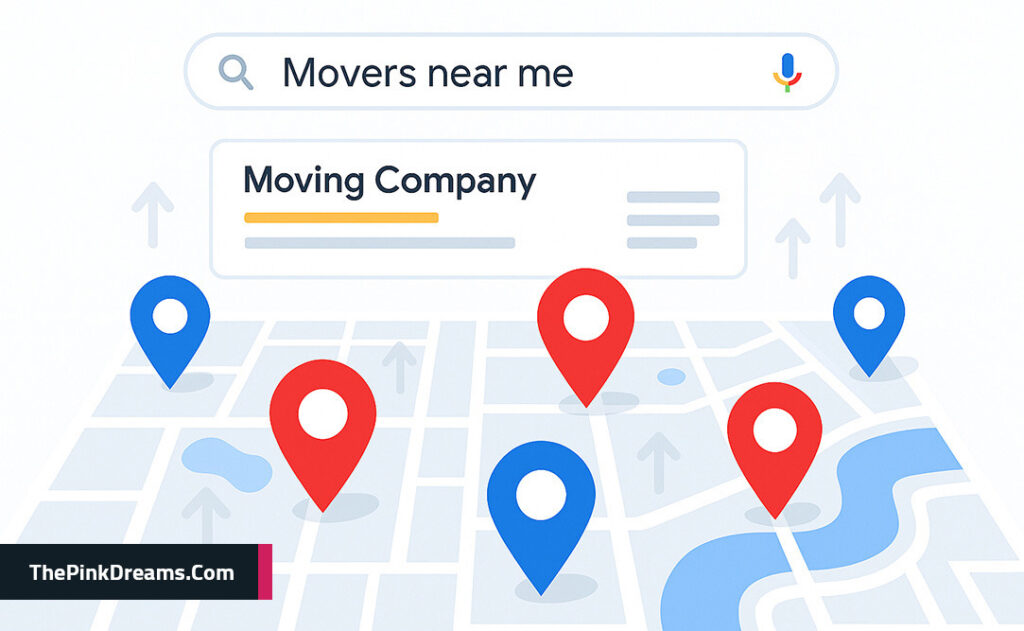
Why it works: Organic search drives about 53% of all website traffic. When your site ranks for terms like “movers in [your city],” you receive a consistent stream of visitors who are specifically looking for your service. No ad spends required.
How to implement it:
- Create dedicated pages on your website for each service you offer (residential, commercial, long-distance, packing, storage)
- Build location-specific pages for each major city or area you serve
- Optimize every page with a unique title tag, meta description, and H1 heading that includes your city and service
- Submit your business to 15-20 online directories (Yelp, BBB, HomeAdvisor, Thumbtack, YellowPages) with identical NAP (Name, Address, Phone) information
- Publish helpful blog content targeting questions your customers ask: “How much does it cost to move in [city]?” “Moving day checklist for [city] residents”
3. Run Google Ads for High-Intent Leads
Google Ads is the fastest way to start generating moving leads. You can have ads showing at the top of Google search results within 24 hours, targeting people who are actively searching for movers right now. While SEO takes months to build, Google Ads delivers immediate visibility.
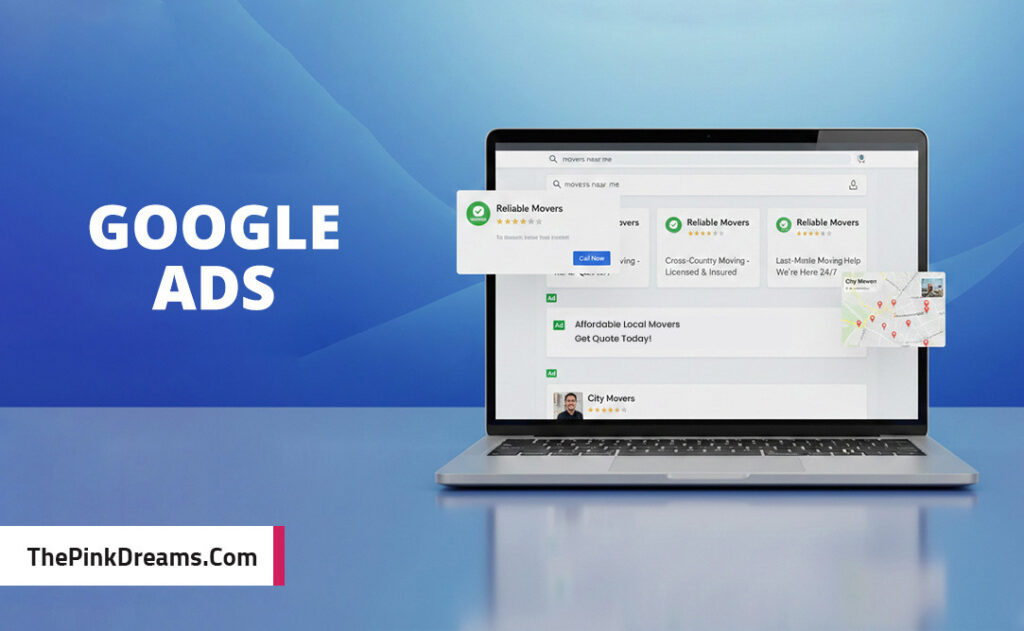
Why it works: Someone searching “movers in Dallas” on Google has high purchase intent. They are not casually browsing. They need a mover. Google Ads puts your business in front of these ready-to-buy customers at the exact moment they are searching.
How to implement it:
- Create separate campaigns for each service type and location (e.g., “Residential Movers Dallas,” “Commercial Movers Dallas”)
- Write ad copy that includes your city, a clear value proposition (“Licensed & Insured,” “Free Quotes,” “5-Star Rated”), and a strong call-to-action
- Build dedicated landing pages for each ad group with a matching headline, trust signals, and a simple quote form
- Add negative keywords (“free,” “DIY,” “jobs,” “hiring,” “salary”) to prevent wasted clicks
- Start with $50-100 per day and monitor cost per lead daily for the first two weeks
- Set up conversion tracking for both form submissions and phone calls so you know exactly which keywords generate leads
Budget tip: Moving keywords typically cost $5-25 per click. A well-optimized campaign should deliver leads at $30-80 each. If your average job is $1,500, that is a strong return on investment.
4. Use Facebook and Instagram Ads
While Google Ads captures people who are already searching, Facebook and Instagram ads reach people before they start searching. This makes social ads ideal for building brand awareness, promoting seasonal offers, and most importantly, retargeting people who visited your website but did not request a quote.
Why it works: Retargeting is where social ads truly shine for movers. Most website visitors do not convert on their first visit. Retargeting ads follow those visitors on Facebook and Instagram with your brand message, bringing them back to your site when they are ready. These campaigns typically deliver 3-5x higher conversion rates than cold traffic ads.
How to implement it:
- Install the Meta (Facebook) Pixel on your website to track visitors
- Create a retargeting audience: people who visited your site in the last 30 days but did not submit a form
- Run retargeting ads with a compelling message: “Still planning your move? Get a free quote from [Your Company]. Licensed, insured, 5-star rated.”
- For cold audiences, target people in your service area who are likely to move: recently engaged, recently sold a home, or showing interest in real estate
- Budget: Start with $10-20 per day for retargeting. Scale based on results
5. Build a High-Converting Website
Your website is where every other lead generation tactic sends traffic. If your site is slow, confusing, or makes it hard to request a quote, you are wasting every dollar you spend on SEO and ads. A high-converting website turns visitors into leads. A poorly built one turns them into your competitor’s customers.
Why it works: Conversion optimization directly increases your lead volume without increasing your traffic. If your site currently converts 2% of visitors into leads and you improve it to 4%, you have doubled your leads with zero additional ad spend.
How to implement it:
- Make your phone number a tappable click-to-call link in the header of every page
- Place a simple quote request form above the fold (visible without scrolling) on your homepage and every service page
- Keep forms short: name, phone, email, moving date, origin, destination. That is all you need to start a conversation
- Add trust signals on every page: Google review rating, license number, insurance info, years in business, and real customer testimonials
- Ensure your site loads in under 3 seconds and works flawlessly on mobile devices
- Use clear calls-to-action with action language: “Get Your Free Quote” instead of “Contact Us”
6. Collect and Showcase Customer Reviews
Reviews are one of the most powerful trust signals in any local service business, and for moving companies, they are especially critical. Customers are handing over their personal belongings to strangers. They want proof that you are reliable, careful, and professional before they call.

Why it works: Reviews influence both Google rankings and customer decisions. Google uses review volume and velocity as local ranking factors. And over 80% of consumers read online reviews before choosing a local business. More positive reviews mean higher rankings and higher conversion rates, a double win.
How to implement it:
- Build a review request into your standard process: after every completed move, send a text or email within 24 hours with a direct link to your Google review page
- Make it easy: provide a short, clickable link (use a URL shortener) with a brief message like “We would love your feedback. It takes 30 seconds.”
- Respond to every review, positive or negative, within 24-48 hours. Thank positive reviewers by name. Address concerns in negative reviews professionally
- Showcase your best reviews on your website homepage, service pages, and landing pages
- Aim for a steady stream of 5-10 new reviews per month rather than a one-time burst
7. Create Location-Based Landing Pages
If you serve multiple cities or neighborhoods, creating a dedicated landing page for each one is one of the highest-impact SEO and advertising strategies available. Each page targets a specific geographic keyword and becomes its own lead generation engine.
Why it works: When someone searches “movers in Burnaby” and you have a page specifically about your moving services in Burnaby, Google considers your page highly relevant to that search. A generic “Service Areas” page listing 20 cities cannot match that relevance.
How to implement it:
- Create a unique page for each city or area you serve (e.g., /movers-in-burnaby, /movers-in-surrey, /movers-in-richmond)
- Write 500+ words of unique content per page describing your services in that specific area. Mention neighbourhoods, landmarks, and local details
- Include a unique title tag and meta description with the city name
- Add a quote form on every location page
- Link each location page from your main navigation or a “Service Areas” hub page
Scenario: A Toronto-area mover created individual pages for Mississauga, Brampton, Scarborough, Markham, and Vaughan. Within 4 months, each page began ranking on Google’s first page for “movers in [city],” collectively generating 15-20 additional organic leads per month.
8. Use Referral and Partner Networks
Referrals remain one of the highest-quality lead sources for moving companies. The key is to stop leaving referrals to chance and start building a system that actively generates them.
Why it works: Referred customers already trust you because someone they trust recommended you. They typically close at much higher rates and are less price-sensitive than leads from other channels.
How to implement it:
- Create formal referral partnerships with real estate agents, property managers, apartment complexes, and storage facilities in your area. Offer a referral fee or reciprocal referral arrangement
- Send a follow-up email to every completed customer asking for referrals. Include a simple incentive: “Refer a friend and you both receive $50 off your next move”
- Print referral cards your crew can hand to customers after a completed move
- Build relationships with local businesses that serve people who are likely to move: real estate lawyers, home stagers, cleaning services, and home inspectors
- Track referral sources so you know which partnerships are producing results
9. Content Marketing (Blogs and Guides)
Publishing helpful content on your website does two things for your moving company: it attracts organic traffic from Google, and it builds trust with potential customers who are in the research phase of their move. Every blog post is a new page that can rank for a keyword and drive visitors to your site.
Why it works: Content marketing captures customers early in their decision-making process. Someone searching “how much does it cost to move a 3-bedroom house” is planning a move. If your blog post answers their question, you are the first mover they encounter. That familiarity and trust gives you a significant advantage when they are ready to request quotes.
How to implement it:
- Publish 2-4 blog posts per month targeting questions your customers ask
- Top-performing topics for movers include moving cost guides, moving day checklists, “how to choose a moving company” guides, seasonal moving tips, and city-specific moving guides
- Every blog post should include a call-to-action linking to your quote form or phone number
- Internally link blog posts to your service pages and location pages to pass SEO value
- Share new posts on your Google Business Profile and social media channels for additional visibility
10. Retargeting Campaigns
Most people who visit your website will not request a quote on their first visit. Studies show that only 2-4% of website visitors convert on their first interaction. Retargeting campaigns bring the other 96-98% back to your site with targeted ads after they leave.
Why it works: Retargeting keeps your brand in front of people who have already shown interest in your services. Because they have visited your site, they are already familiar with your business. This familiarity dramatically increases conversion rates compared to reaching cold audiences. Retargeting campaigns typically deliver the lowest cost per lead of any paid advertising channel.
How to implement it:
- Install tracking pixels from Google Ads and Facebook/Meta on your website
- Create retargeting audiences: people who visited your site in the last 14-30 days but did not submit a form
- Run display ads on Google and feed ads on Facebook/Instagram showing your brand, a strong testimonial, and a clear call-to-action
- Use messaging that acknowledges their interest: “Still planning your move? Let us make it easy. Get a free quote today.”
- Budget: $10-20 per day is enough to start. Retargeting is the most cost-efficient paid channel for local service businesses
How to Combine These Tactics for Maximum Results
No single tactic will fill your calendar on its own. The moving companies that stay consistently busy are the ones that combine multiple lead sources into a system where each channel reinforces the others.
Here is how the pieces fit together: Local SEO and content marketing drive organic traffic to your website over time. Google Ads deliver immediate leads while your SEO builds momentum. Your website converts that traffic into quote requests. Reviews and GBP optimization boost your visibility in local search. Retargeting brings back visitors who were not ready to convert on their first visit. And referral partnerships provide a steady stream of high-quality, pre-qualified leads.
The result is a lead generation engine that does not depend on any single channel. If Google Ads costs spike one month, your organic traffic compensates. If referrals slow down in winter, your ads and content keep the leads flowing. This multi-channel resilience is what keeps the best moving companies busy year-round.
Common Lead Generation Mistakes to Avoid
Relying on one channel: If referrals dry up or your lead platform raises prices, your entire business is at risk. Diversify your lead sources.
Ignoring SEO: Every month without SEO is a month you are handing free organic leads to your competitors. Start now, even if results take time.
Poor website design: A slow, outdated website kills conversions from every channel. Fix your site before you spend money driving traffic to it.
Not tracking results: If you cannot measure cost per lead by channel, you cannot optimize your spend. Set up analytics and conversion tracking from day one.
Buying shared leads: Shared leads from aggregator platforms mean you are competing with 5-6 other movers for every job. Invest in generating your own exclusive leads instead.
Why Choose Pink Dreams for Lead Generation
At Pink Dreams, the team specializes in building complete lead generation systems for moving companies and local service businesses across Canada and the United States. Every strategy is designed around one outcome: filling your moving calendar with qualified, exclusive leads that you do not have to share with competitors.
As a Google Partner and Microsoft Advertising Partner, Pink Dreams brings certified expertise in SEO, Google Ads, Meta Ads, website optimization, and lead generation strategy. The team’s five-step process (Discovery, Strategy Blueprint, Execution, Optimization, and Scaling) ensures your marketing is not random, it is systematic. Visit thepinkdreams.com to get a free digital presence audit and discover the lead generation opportunities specific to your market.
How to Get Started Today
You do not need to implement all 10 tactics at once. Start with the highest-impact actions and build from there.
Today: Fully optimize your Google Business Profile. Complete every field, add photos, and post an update.
This week: Ask your last 5 completed customers for a Google review. Send a text with a direct link.
This month: Audit your website for speed, mobile-friendliness, and conversion elements. Fix the biggest issues.
Next month: Launch a targeted Google Ads campaign for your primary service area with a dedicated landing page.
Ongoing: Publish 2-4 blog posts per month, continue collecting reviews, and expand your location pages.
Conclusion
The moving companies that stay busy year-round are not the ones with the best trucks or the lowest prices. They are the ones with the most consistent lead flow. By implementing these 10 tactics, you build a system that generates leads from multiple sources, so your business never depends on a single channel.
Start with your Google Business Profile and website fundamentals. Layer on Google Ads for immediate results. Build long-term organic traffic through SEO and content marketing. And use retargeting and referral networks to capture every possible opportunity.
If you want expert help building a lead generation system for your moving company, Pink Dreams specializes in digital marketing for movers. Visit thepinkdreams.com to claim your free digital presence audit and get a personalized growth strategy.
FAQ
How do movers get more leads?
The most effective approach combines multiple channels: an optimized Google Business Profile for local visibility, local SEO for organic traffic, Google Ads for immediate leads, a high-converting website, customer reviews for trust, and retargeting ads to recapture visitors who did not convert on their first visit.
What is the best marketing strategy for moving companies?
The best strategy combines local SEO for long-term organic traffic, Google Ads for immediate leads, Google Business Profile optimization for local map visibility, and a website optimized for conversions. This multi-channel approach ensures consistent lead flow regardless of season or market conditions.
Is SEO important for movers?
SEO is critical. It drives free, ongoing traffic from customers actively searching for moving services. While it takes 3-6 months for significant results, the leads it generates are free and continue indefinitely. Companies with strong SEO consistently report lower cost per lead and higher close rates.
How much does lead generation cost for moving companies?
Costs depend on your strategy. Google Ads typically costs $1,500-$3,000 per month with a cost per lead of $30-$80. SEO ranges from $500-$2,500 per month. A comprehensive strategy might cost $3,000-$7,000 per month total. The key metric is ROI: if your cost per booked job is $150 and the average job is worth $1,500, that is a 10x return.
How long does it take to see results?
Google Ads can generate leads within the first week. Google Business Profile improvements show impact in 2-4 weeks. SEO content takes 3-6 months for meaningful ranking gains. A comprehensive strategy should produce measurable increases in leads by month 3, with results compounding beyond that.

Digital Marketing Strategist & Business Coach
As a leading digital marketing strategist and business coach, he is responsible for helping entrepreneurs and brands grow faster in a smarter, more scalable way. With over 20 years of experience, Nagarajan specializes in practical coaching, automation-first marketing strategies, and technology-driven growth systems. His work focuses on enhancing brand visibility, improving performance, and building sustainable frameworks that enable long-term business success.